
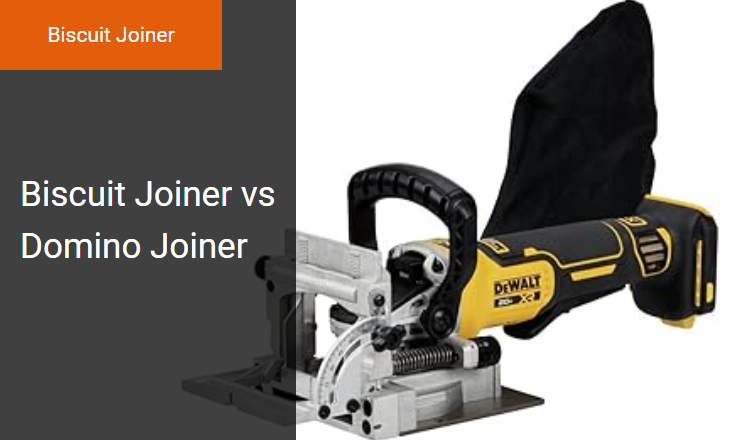
Achieving perfectly flush face-to-face alignment during complex wood glue-ups is a notoriously frustrating challenge, as boards inevitably slip under heavy clamp pressure. To combat this, craftspeople traditionally rely on standard alignment methods like manual doweling or pocket screws to keep workpieces registered.
However, integrating a biscuit joiner (plate joiner) into your workflow grants unparalleled lateral adjustability and speed, transforming chaotic glue-ups into seamless, stress-free assemblies. It is crucial to stipulate, however, that biscuit joinery is primarily designed for alignment rather than structural, load-bearing strength. This makes the tool exceptionally suited for specific projects like tabletop panel glue-ups and cabinet carcase alignment.
In this article, we will compare the classic biscuit joiner against the premium mortise-and-tenon system of the Domino joiner. We will analyze their precision, joint strength, and cost-efficiency to help you choose the best tool for your workshop's alignment needs.

| Factor | Summary |
|---|---|
| Joint Strength | Domino joiners use thick, solid wood loose tenons that offer superior shear strength compared to the thin, compressed beechwood biscuits used in biscuit joiners. |
| Alignment vs. Structure | Biscuit joiners excel at lateral alignment during glue-ups, whereas domino joiners provide both precise alignment and heavy-duty structural integrity. |
| Mortise Creation Method | A domino joiner utilizes a unique oscillating cutter action to plunge-cut precise mortises, while a biscuit joiner uses a spinning circular saw blade to cut arc-shaped slots. |
| Cost and Accessibility | Biscuit joiners are highly affordable and widely accessible for hobbyists, whereas the proprietary Domino system represents a significant financial investment geared toward professional workshops. |
| Application Versatility | Domino joiners support diverse angled and heavy-duty carcass joinery, while biscuit joiners are primarily limited to alignment in flat sheet goods. |
Lateral tolerance of compressed beechwood biscuits for lateral alignment flexibility
The biscuit joiner utilizes football-shaped, compressed beechwood biscuits that swell when they contact water-based wood glue. A major advantage of this design is the lateral tolerance it provides. Because the cut slots are wider than the biscuits, woodworkers can easily slide workpieces horizontally during assembly, ensuring flush face alignment before the glue cures and expands the wood to lock the joint.
Conversely, a Domino joiner uses rectangular beech tenons. While the Domino system offers high structural strength, its joints are inherently more rigid and demand precise placement. Cabinetmakers and DIY enthusiasts prioritizing fast, forgiving alignment on panel layups benefit most from the biscuit joiner, while professional furniture makers requiring heavy-duty structural joints find the Domino joiner more suitable.
Adjustable reference fence configuration for vertical flushness control
When aiming for vertical flushness in wood joinery, the configuration of the adjustable reference fence is critical. A biscuit joiner features a pivoting fence that adjusts for height and angle, referencing the workpiece surface to align the slot. While this fence provides reliable vertical positioning, the inherent lateral play of the biscuit allows for minor manual adjustments during assembly, compensating for any slight fence misalignment.
In contrast, the Domino joiner utilizes a highly precise, stepped indexing fence designed for exact vertical alignment. Because Domino mortises offer virtually zero vertical tolerance, the fence configuration must be perfectly calibrated to ensure flush joints upon insertion. Biscuit joiners are best suited for general hobbyists and cabinetmakers seeking quick, forgiving alignments in sheet goods, while Domino joiners are ideal for professional furniture makers requiring structural mortise-and-tenon strength with flawless precision.
Carbide-tipped blade kerf width matching standard biscuit sizes
A biscuit joiner utilizes a carbide-tipped circular blade to cut high-precision, crescent-shaped slots. The kerf width of this blade is precisely engineered to match standard biscuit sizes, such as #0, #10, and #20, ensuring a snug vertical fit while allowing for lateral adjustment during assembly. This exact kerf matching prevents the compressed beechwood biscuits from slipping, resulting in flush surfaces during panel glue-ups.
In contrast, a Domino joiner uses a specialized oscillating cutter to create deep, mortise-and-tenon style joints. While the Domino provides superior load-bearing strength for structural furniture, the biscuit joiner remains the industry standard for rapid sheet goods alignment. Woodworkers prioritizing quick, forgiving alignment on flat panels typically choose the biscuit joiner, whereas professional furniture makers requiring heavy-duty structural joints opt for the Domino system.
Domino oscillating cutter mortise creation versus biscuit crescent-shaped slots
A biscuit joiner utilizes a spinning circular blade to plunge crescent-shaped slots into mating workpieces. This design inherently provides lateral play, making it highly forgiving for aligning panels during glue-ups. Conversely, a Domino joiner employs a unique oscillating cutter that rotates and sweeps side-to-side, carving precise, flat-bottomed mortises. This advanced mechanism accommodates solid wood loose tenons, which deliver exceptional structural strength and torsional resistance that far exceed the capabilities of thin, compressed beech biscuits.
Selecting the appropriate tool depends entirely on project requirements and production scale. Biscuit joiners are ideal for DIY enthusiasts seeking rapid alignment of cabinet face frames, whereas Domino joiners suit professional furniture makers requiring high-strength, load-bearing joints for heavy-use cabinetry.
Volumetric expansion of biscuits via water-based PVA adhesive absorption
The biscuit joiner relies on a distinct physical reaction to secure wood joints. When compressed beechwood biscuits are inserted into the slots, they absorb the water content from standard PVA adhesive. This moisture absorption triggers a rapid volumetric expansion of the wood fibers, swelling the biscuit to lock the joint tightly in place and compensating for minor lateral misalignments.
The Domino joiner utilizes a rotating, oscillating cutter to create precise mortises for solid hardwood tenons. This system relies on a tight mechanical tolerance rather than material expansion, delivering superior shear and tensile strength for structural applications. Biscuit joiners are ideal for hobbyists seeking quick alignment in sheet goods, while Domino joiners are best suited for professional furniture makers requiring maximum joint strength.
Blade height registration accuracy for precise stock centerline alignment
When aligning workpieces along a precise centerline, blade height registration accuracy is a critical differentiator between biscuit joiners and Domino joiners. Standard biscuit joiners utilize an adjustable fence that, while functional, can introduce slight deviations due to minor flex or play in the locking mechanism. This variance often requires additional sanding to achieve a perfectly flush joint after assembly.
The Domino joiner features a highly rigid, stepped height-adjustment system that locks securely into place. This design minimizes mechanical deflection, ensuring that mortise depth and vertical centering remain highly repeatable across multiple workpieces. Woodworkers focused on rapid sheet-good alignment benefit from the accessible biscuit joiner, while professional furniture makers requiring flawless, load-bearing mortise-and-tenon precision will find the Domino indispensable.
Spring-loaded plunge mechanism and depth stop calibration for uniform slotting
Both biscuit and domino joiners utilize spring-loaded plunge mechanisms for smooth, controlled entry into workpieces. In biscuit joiners, this plunge system guides a circular blade to cut crescent-shaped slots. Accurate depth stop calibration is essential to prevent the blade from cutting too deep, ensuring the biscuit correctly aligns panels while allowing lateral adjustment during glue-up.
Conversely, the domino joiner employs an oscillating cutter that plunges to create precise, mortise-like pockets. Its rigid, stepped depth stops deliver highly repeatable pockets for loose-tenon joinery. Biscuit joiners are ideal for cabinetmakers seeking rapid panel alignment, whereas domino joiners are suited for professional furniture makers requiring heavy-duty, load-bearing joint strength.
Leave a comment