
Buffer Category
Featured
Important Notes
Buffer Power Tool Frequently Asked Questions
What is the primary purpose of a buffer power tool?
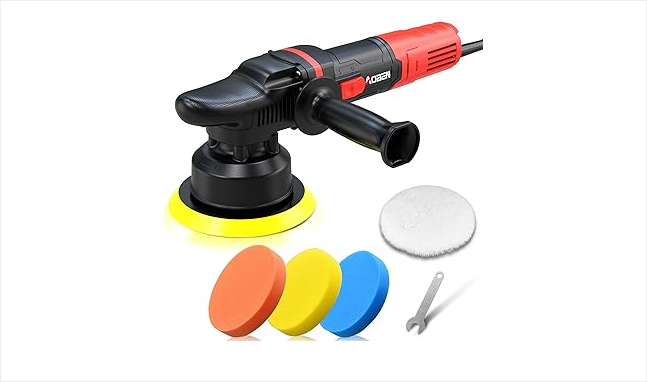
A buffer power tool is designed to smooth, polish, and restore the finish of various surfaces, most commonly automotive paint, metal, and wood. By using rotating or oscillating pads with polishing compounds, it removes oxidation, minor scratches, and swirl marks to create a high-gloss, reflective shine.
What is the difference between a rotary buffer and a dual-action polisher?
A rotary buffer features a direct drive motor where the pad rotates in a single circular motion, offering high heat and friction for heavy correction. In contrast, a dual-action (DA) polisher spins and oscillates simultaneously in an eccentric pattern, making it much safer for beginners as it minimizes the risk of burning through the paint or creating holograms.
Which buffing pad density should I use for my project?
Pad selection depends on the level of surface correction needed. Firm, coarse foam or wool pads are used for heavy cutting and removing deep scratches. Medium-density pads are ideal for general polishing and light oxidation, while soft, fine-textured pads are reserved for applying finishing glazes or wax to achieve maximum gloss.
How do I prevent swirl marks while using a buffer?
To avoid swirl marks, ensure the surface is thoroughly cleaned and decontaminated before starting. Use a clean pad, keep the tool moving constantly to avoid localized heat buildup, and apply light, even pressure. Additionally, using a dual-action polisher instead of a rotary buffer significantly reduces the likelihood of inducing new swirls.
How often should I clean or replace my buffing pads?
Buffing pads should be cleaned frequently during use-ideally after every couple of sections-to remove spent compound and removed paint residue. You can use a pad brush or compressed air for quick cleans. Replace the pad entirely once the foam begins to lose its structural integrity, starts tearing, or becomes permanently saturated with dried product.
Find Packaging Ideas
Our Articles on Buffer
Buffer Link Shortening vs. Custom Domains - Optimizing Link Tracking with Buffer's Buff.ly Shortener
Compare Buffer's buff.ly shortener vs. custom domains to optimize your social media link tracking, boost brand trust, and increase click-through rates.
May 01, 2026
Buffer RSS Feed Integration vs. Zapier RSS - Automating Content Curation for the Buffer Queue
Compare Buffer RSS vs. Zapier RSS to find the best tool for automating your content curation and keeping your Buffer queue consistently full.
Apr 07, 2026
Buffer Analytics vs Google Analytics - Measuring Social Media Campaign ROI with Buffer's Native UTM Parameters
Compare Buffer Analytics vs Google Analytics and learn how to measure social media ROI using Buffer's native UTM parameters for precise tracking.
Mar 25, 2026
Buffer Engagement Tool vs. Native Platform Inbox - Streamlining Social Media Response Workflows with Buffer Engagement
Compare the Buffer Engagement Tool and native social media inboxes to see which best streamlines your response workflows and boosts audience engagement.
Mar 25, 2026
Buffer Webhooks vs. Polling API - Best Method for Real-Time Buffer Queue Synchronization
Discover the key differences between Buffer Webhooks and Polling APIs to choose the best method for efficient, real-time social media queue synchronization.
Mar 21, 2026
Mastodon API vs Twitter API - Streamlining Multi-Platform Publishing via Buffer's API Integration
Compare Mastodon and Twitter APIs and discover how to streamline your multi-platform social publishing using Buffer's API integration.
Mar 21, 2026
Buffer Queue vs Drafts - Streamlining Social Media Scheduling in Your Buffer Content Pipeline
Streamline your social media scheduling: Learn when to use Buffer Queue vs. Drafts to optimize your content pipeline and boost posting efficiency.
Feb 27, 2026
Buffer API vs Zapier Integration - Automating Custom Publishing Workflows via the Buffer Developer API
Deciding between the Buffer API and Zapier? Discover how to automate custom publishing workflows using the Buffer Developer API for ultimate control.
Feb 17, 2026
Buffer Direct Publishing vs. Mobile Reminders - Streamlining Instagram Content Delivery with Buffer Automated Scheduling
Compare Buffer Direct Publishing vs. Mobile Reminders to find the best automated scheduling workflow and streamline your Instagram content delivery.
Feb 10, 2026
Creator Plan vs Team Plan - Managing Multi-User Permissions in Buffer
Discover the differences between Buffer's Creator and Team plans and learn how to manage multi-user permissions for seamless social media collaboration.
Feb 10, 2026
Buffer Start Page vs Linktree - Creating a High-Converting Link-in-Bio with Buffer's Micro-Landing Page Builder
Compare Buffer Start Page vs Linktree to see which tool builds the highest-converting link-in-bio and micro-landing page for your brand.
Jan 16, 2026
Buffer Image Generator vs Canva Integration - Designing Social Media Visuals inside the Buffer Composer
Compare Buffer's native Image Generator and Canva integration to find the best way to design and schedule social media visuals directly inside the Buffer Composer.
Jan 13, 2026
Buffer Bulk Uploader vs. CSV Import - Streamlining Bulk Scheduling for the Buffer Queue
Compare Buffer Bulk Uploader vs. CSV Import to discover the best way to streamline your bulk scheduling and optimize your Buffer queue.
Jan 12, 2026
Custom Posting Schedule vs. Queue Autofill - Streamlining Social Media Automation in Buffer
Compare Buffer's Custom Posting Schedule vs. Queue Autofill to find the perfect automation strategy to streamline your social media workflow.
Jan 04, 2026
Buffer Organization Settings vs Channel Permissions - Managing Team Access Levels in Buffer Workspaces
Learn the difference between Buffer Organization Settings and Channel Permissions to easily manage your team's workspace access and publishing roles.
Jan 02, 2026