
Screwdriver Category
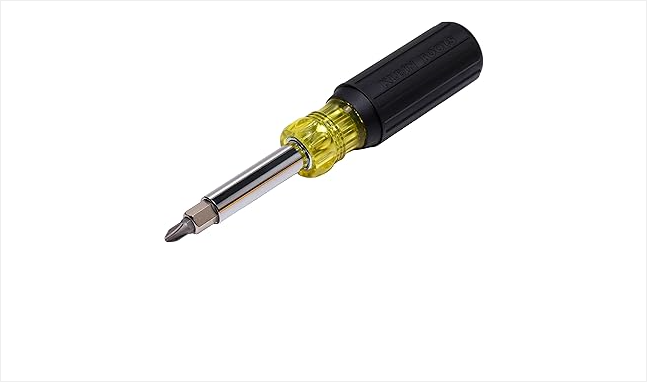
Featured
Important Notes
Screwdriver Power Tool FAQ
What is the difference between a drill driver and an impact driver?
A drill driver is designed for precision drilling and light fastening with an adjustable clutch to prevent over-driving screws. An impact driver uses a rapid concussive mechanism to provide high torque, making it superior for driving long or heavy-duty fasteners into tough materials without stripping the screw head.
How do I choose the correct torque setting on my power screwdriver?
The torque setting, or clutch, determines how much resistance the tool applies before it stops spinning. For small screws or soft woods, use a lower numerical setting to avoid snapping the screw or sinking it too deep. For larger fasteners and hardwoods, increase the setting to provide more driving power.
Can I use standard screwdriver bits in an impact driver?
It is recommended to use "impact-rated" bits specifically designed for the high-torque demands of impact drivers. Standard bits are often too brittle and may shatter or deform under the intense rotational force produced by the impact mechanism.
What voltage should I look for in a cordless power screwdriver?
For household tasks and light assembly, a 4V to 12V tool is usually sufficient and lightweight. For professional construction, heavy DIY projects, or driving large lag bolts, an 18V or 20V platform is the industry standard for providing adequate runtime and power.
How do brushless motors improve power tool performance?
Brushless motors use electronic controllers instead of physical carbon brushes to manage power. This results in less internal friction, which leads to longer motor life, increased battery runtime per charge, and more power delivered to the screwdriver head in a more compact tool design.
Find Packaging Ideas
Our Articles on Screwdriver
Adjustable Clutch vs. Fixed Torque - Right Power Screwdriver for Precise Torque Control
Compare adjustable clutch vs. fixed torque power screwdrivers to find the perfect tool for achieving precise torque control in your projects.
May 17, 2026
Pistol Grip vs. Inline - Right Electric Screwdriver for Ergonomic Fastening
Compare pistol grip vs. inline electric screwdrivers to choose the best ergonomic tool for your fastening needs and reduce operator fatigue.
Apr 20, 2026
Gyroscopic Activation vs. Trigger Switch - Enhancing Rotational Speed Control in Cordless Screwdrivers
Compare gyroscopic activation and traditional trigger switches to discover which technology offers superior rotational speed control in cordless screwdrivers.
Mar 01, 2026
Push-To-Start vs. Lever Start - Right Activation Method for Electric Torque Screwdrivers
Compare push-to-start vs. lever-start electric torque screwdrivers to find the best activation method for your assembly line's efficiency and ergonomics.
Feb 10, 2026
Slip Clutch vs Shut-Off Clutch - Right Torque Control for Precision Screwdriver Assembly
Compare slip clutch vs. shut-off clutch torque control to choose the right precision screwdriver and ensure quality in your assembly process.
Feb 01, 2026
Hex Collet vs Keyless Chuck - Right Bit Holder for Power Screwdriver Torque Transfer
Compare hex collets vs. keyless chucks to find the best bit holder for your power screwdriver and ensure maximum torque transfer for your projects.
Jan 06, 2026
Planetary Gearbox vs Direct Drive - Optimizing Torque Efficiency in Electric Screwdrivers
Compare planetary gearboxes vs. direct drive in electric screwdrivers to discover which design delivers optimal torque efficiency and performance.
Jan 02, 2026