
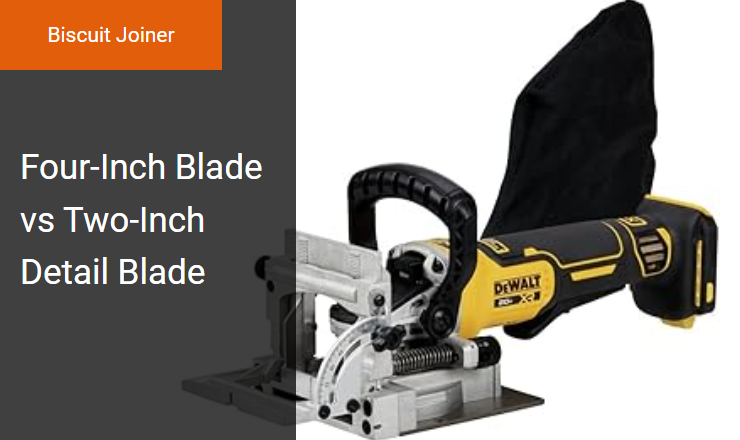
For precision woodworkers, achieving maximum joint strength without compromising delicate workpieces is a persistent workshop struggle. Standard joinery methods, such as pocket screws or traditional four-inch biscuit setups, often prove too aggressive for narrow stock, leading to split wood or visible telegraphing.
While standard four-inch blades remain the industry benchmark for heavy carcass construction, optimizing smaller assemblies requires a shift in strategy. Utilizing a specialized two-inch detail blade grants craftsmen the unique ability to reinforce delicate joints with microscopic precision, ensuring structural integrity where larger cutters fail. However, a key educational stipulation remains: blade selection must strictly align with your material's thickness thresholds and load-bearing expectations.
For instance, when constructing mitered picture frames or narrow cabinet face frames, the smaller footprint of the detail blade prevents blowout. In this article, we will analyze the mechanical differences between four-inch and two-inch blades, evaluate their impact on shear strength, and provide a definitive guide to selecting the optimal blade for your next project.
| Factor | Summary |
|---|---|
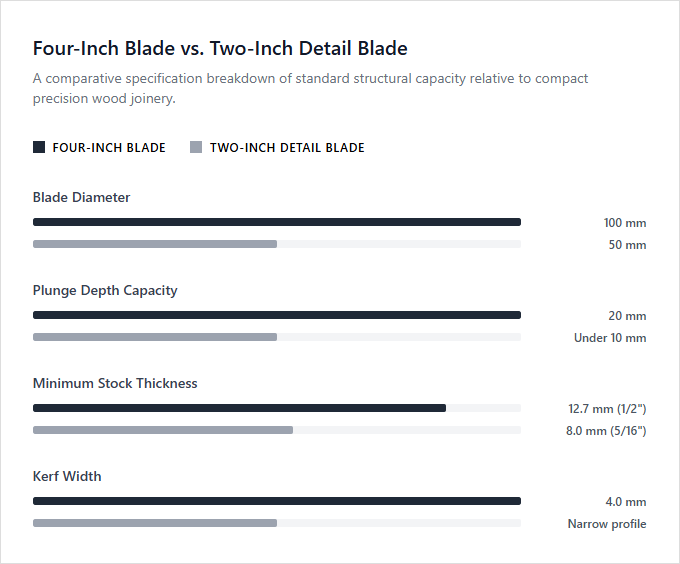
| Blade Diameter | The four-inch blade utilizes a standard 100mm diameter for deep plunge cuts, whereas the two-inch detail blade measures approximately 50mm for compact, specialized joinery. |
| Biscuit Size Compatibility | Four-inch blades are engineered to cut slots for standard biscuit sizes including #0, #10, and #20, while the two-inch detail blade is designed specifically for micro-sized Face Frame (FF) biscuits. |
| Kerf Width | The four-inch blade cuts a standard 4mm kerf to match the thickness of heavy-duty wooden splines, whereas the two-inch blade produces a narrower slot suitable for thin-profile fasteners. |
| Minimum Stock Thickness | Standard four-inch blades require a minimum workpiece thickness of 1/2 inch to prevent grain blowout, whereas the two-inch detail blade safely operates on delicate wood stock as thin as 5/16 inch. |
| Joint Tensile Strength | Large biscuits inserted via the four-inch blade offer high shear and tensile strength for structural casework, while the smaller surface area of the two-inch blade joint provides light-duty alignment ideal for picture frames. |
| Plunge Depth Capacity | The four-inch blade achieves a maximum plunge depth of up to 20mm into the wood grain, whereas the two-inch detail blade is mechanically restricted to a shallow plunge depth of under 10mm. |
4-Inch Blades Maximize Biscuit Joint Strength
The selection of a biscuit joiner blade size significantly influences the structural integrity of a joint. Standard four-inch blades are engineered to maximize both glue surface area and tensile strength. By accommodating larger biscuit volumes, such as sizes 0, 10, and 20, these blades cut deep, wide slots that distribute mechanical stress efficiently across large furniture panels and heavy-duty framing projects.
In comparison, the compact two-inch detail blade is designed for delicate assemblies where material thickness is limited. These smaller cuts prevent the biscuit from telegraphing through thin wood surfaces, preserving the aesthetic of narrow face frames. Standard four-inch blades are ideal for professional cabinetmakers undertaking structural furniture builds, while two-inch detail blades best serve finish carpenters and craftspeople working on intricate, low-stress joinery.
Detail Blades Prevent Blowout in Thin Workpieces
Standard four-inch biscuit joiner blades serve as the industry benchmark for standard cabinetry and framing, providing the deep penetration necessary for robust, load-bearing joints. Working with delicate materials requires a more refined approach to prevent irreparable workpiece damage. Two-inch detail blades offer a specialized solution by drastically reducing the cutting radius and slot dimensions.
These smaller two-inch blades minimize kerf depth to prevent structural blowout in thin workpieces, preserving the aesthetic and structural integrity of narrow picture frames, face frames, and jewelry boxes. Standard four-inch blades are ideal for general carpenters and furniture builders handling thick stock, while the precision of two-inch detail blades is perfectly suited for fine woodworkers and luthiers crafting intricate, low-profile assemblies.
Four-Inch Slots Simplify Joint Alignment
The standard four-inch blade is the industry benchmark for biscuit joining, utilizing size #0, #10, and #20 biscuits. A primary benefit of this system is that standard four-inch slots offer increased lateral tolerance. This side-to-side play allows for easier joint alignment and minor adjustments during assembly, which is essential for aligning large panels and tabletops.
The two-inch detail blade is designed for smaller, thinner workpieces where a standard blade would cut through the exterior. It uses miniature biscuits to join delicate trim and narrow face frames without sacrificing material integrity. The standard four-inch system is ideal for cabinetmakers requiring forgiving alignment on large casework, while the two-inch detail option is best suited for detail-oriented artisans and finish carpenters working with delicate moldings.
Moisture-Induced Biscuit Expansion Creates High-Pressure Locks
The standard four-inch biscuit joiner blade is the industry benchmark for structural woodworking, cutting wide pockets designed for standard biscuits. When water-based glue is introduced, the moisture-induced expansion of the compressed biscuit creates a high-pressure mechanical interlock in these four-inch pockets, ensuring maximum joint strength and long-term durability.
The two-inch detail blade cuts smaller slots tailored for thin or delicate workpieces where standard biscuits would otherwise break through the wood surface. These smaller joints provide clean, invisible alignment for picture frames and narrow face frames. Professional cabinetmakers tackling heavy carcass construction benefit most from the robust four-inch system, while instrument makers and finish carpenters specializing in delicate trim require the precision of the two-inch blade.
Detail Blades for Narrow Face Frame Integrity
Selecting the correct blade size for a biscuit joiner is crucial for maintaining the strength and clean appearance of your woodwork. Standard four-inch blades excel at heavy-duty panel alignment, where ample material exists to house larger biscuits. In contrast, the two-inch detail blade is engineered specifically for intricate joinery, ensuring that plunge cuts do not blow through the sides of thin stock.
By keeping the pocket depth and width compact, detail blades successfully maintain structural integrity near the mating surfaces of narrow face frames. Standard four-inch models are best suited for production cabinetmakers assembling large carcass panels, while two-inch detail setups are ideal for precision furniture makers and finish carpenters crafting delicate trim profiles.
Larger Blade Diameter Optimizes Tension Stress Distribution
When selecting biscuit joiner blades, the primary engineering distinction lies in how they manage mechanical forces. A standard four-inch blade creates a larger slot, which distributes joint stress loads over a significantly wider shear plane under structural tension. This expansive surface area provides superior resistance against pulling forces, making the four-inch system the industry standard for load-bearing assemblies.
The two-inch detail blade cuts shallower, narrower slots designed specifically for thin stock and delicate trim. While it offers less shear resistance, it prevents the cutting tool from blowing through the face of smaller workpieces. The larger four-inch system is ideal for professional cabinetmakers constructing heavy furniture, while the compact two-inch detail blade is best suited for instrument makers and detail woodworkers handling intricate, low-stress joints.
How Mismatched Blade RPMs Affect Plunge Cuts
When selecting between a standard four-inch blade and a two-inch detail blade for a biscuit joiner, rotational speed compatibility is a critical technical consideration. Operating a smaller two-inch blade on a standard joiner configured for a larger blade often leads to mismatched RPMs. Because smaller blades require higher rotational speeds to achieve the necessary surface feet per minute, utilizing them on an unaltered, lower-RPM arbor results in an inefficient cut. This speed discrepancy directly impairs the clean execution of the plunge cut, causing fiber tearing, wood burning, and imprecise slot geometry.
To avoid these mechanical issues, operators must match the tool's spindle speed to the specific blade diameter. The robust four-inch blade is best suited for professional cabinetmakers undertaking heavy-duty structural casework, while the compact two-inch detail blade is ideal for specialized artisans crafting delicate, thin-profile picture frames and jewelry boxes.
Leave a comment