
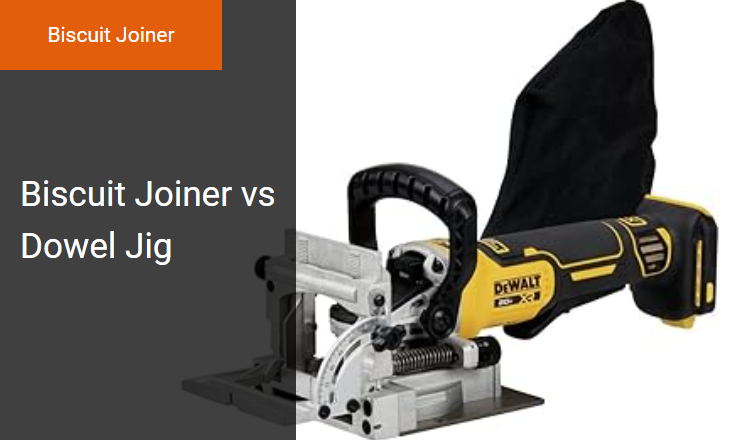
Achieving perfectly flush joints during a complex wood glue-up is a notoriously frustrating challenge, often resulting in misaligned faces and hours of corrective sanding. While standard alignment methods-such as pocket screws or manual clamping blocks-provide basic hold, they frequently allow boards to shift under clamp pressure.
The biscuit joiner (or plate joiner) addresses this pain point by granting woodworkers rapid, lateral adjustability alongside flawless vertical registration. It is important to stipulate, however, that biscuit joints are engineered primarily for alignment and sheer strength, rather than high-load structural reinforcement. When edge-gluing large hardwood panels, like an oak tabletop, this tool ensures a seamless surface with minimal fuss.
In this article, we will directly compare the biscuit joiner against the traditional dowel jig. We will analyze their setup times, joint strength, and precision to help you determine the most efficient alignment method for your workshop projects.

| Factor | Summary |
|---|---|
| Joint Strength | Dowel jigs create stronger mechanical bonds due to deeper penetration of cylindrical wooden pegs, whereas biscuit joiners rely on the moisture-expansion of compressed beechwood splines. |
| Alignment Tolerance | Biscuit joiners allow for lateral play along the longitudinal axis for easy workpiece adjustment during assembly, while dowel jigs require precise, zero-tolerance indexing. |
| Cutting Mechanism | A biscuit joiner utilizes a spring-loaded plunge mechanism with a circular carbide blade to mill crescent-shaped slots, whereas a dowel jig guides a standard twist drill bit. |
| Structural Integrity | Dowel joints provide superior shear strength against rotational forces, whereas biscuit joints are primarily designed to prevent cupping in panel glue-ups. |
| Application Suitability | Biscuit joiners excel at edge-to-edge lamination of sheet goods, while dowel jigs are preferred for heavy-duty carcase construction and frame joinery. |
| Operation Speed | The rapid plunge action of a biscuit joiner minimizes setup and processing time compared to the repetitive clamping and drilling cycle of a dowel jig. |
Crescent Slot for Horizontal Alignment Adjustment
When comparing a biscuit joiner to a dowel jig for woodworking joinery, the primary functional difference lies in alignment flexibility. A biscuit joiner cuts a crescent-shaped slot that is slightly wider than the matching wooden biscuit. This deliberate lateral play within the crescent-shaped slot allows for precise horizontal alignment adjustments of the workpieces during assembly, before the adhesive cures.
In contrast, a dowel jig requires absolute measurement precision during drilling, as round dowel pins offer virtually no lateral tolerance once inserted. Biscuit joiners are ideal for cabinetmakers and production woodworkers prioritizing rapid assembly and forgiving alignment, whereas dowel jigs are best suited for traditional furniture makers requiring maximum joint strength and rigid, unyielding alignment.
How Beechwood Biscuits Expand to Lock Joints
When comparing a biscuit joiner to a dowel jig, the fundamental difference lies in their joint-locking mechanisms and alignment flexibility. The biscuit joiner utilizes compressed beechwood biscuits that rely on hygroscopic expansion to secure the connection. Once inserted into the slot, these biscuits absorb water from water-based polyvinyl acetate (PVA) glue, swelling to create a tight, durable mechanical lock as the adhesive cures.
In contrast, a dowel jig guides precise drill bits to create cylindrical holes for wooden dowels, offering high shear strength but requiring absolute alignment accuracy during assembly. Biscuit joiners are ideal for production woodworkers seeking fast, forgiving alignment on sheet goods and tabletop glue-ups, while dowel jigs are best suited for traditional furniture makers who require maximum joint strength in load-bearing frames.
Same-Face Referencing Prevents Joint Offset
When joining timber, achieving a perfectly flush surface is critical. A biscuit joiner excels in this regard because its adjustable fence allows you to reference consistently from the same face side of both workpieces. This uniform registration prevents height offset at the joint line, effectively compensating for any minor variations in material thickness during assembly.
In contrast, while a dowel jig provides exceptional joint strength, it requires meticulous alignment and offers little lateral tolerance. The biscuit joiner's design allows for slight side-to-side adjustments during glue-up, simplifying the alignment of large panels. Biscuit joiners are ideal for production cabinetmakers prioritizing speed and seamless panel alignment, whereas dowel jigs are best suited for traditional furniture makers requiring maximum joint strength in structural frames.
Plunge-Cutting Blades Cut Slots Faster Than Dowel Jigs
When evaluating wood joinery methods, operational efficiency is a primary differentiator. A biscuit joiner utilizes a plunge-cutting, carbide-tipped blade to create precise slots significantly faster than the repetitive drilling process required by a self-centering dowel jig. The rapid, single-motion plunge of the joiner eliminates the tedious clamping, alignment, and chip-clearing cycles associated with drilling individual dowel holes, streamlining workflow during assembly.
While dowels provide excellent shear strength, biscuits offer lateral play during glue-up, simplifying the alignment of large panels. Professional cabinetmakers and high-volume woodworkers prioritizing assembly speed will benefit most from a biscuit joiner, whereas detail-oriented furniture makers requiring high-strength, hidden joints are better suited to the precision of a dowel jig.
Biscuit Joints vs. Dowels: Shear vs. Tensile Strength
When selecting a joinery method, understanding the mechanical forces at play is essential for long-term structural integrity. A biscuit joiner is engineered for rapid alignment, utilizing compressed beechwood splines that expand when exposed to water-based glue. These biscuit joints provide high shear strength to prevent lateral shifting, making them highly effective for leveling tabletop glue-ups and aligning sheet goods during assembly.
Conversely, biscuit joints offer less tensile strength than deep-set fluted dowels, which penetrate much further into the wood fibers to resist pulling forces. A dowel jig guides precise, deep drillings that accommodate these robust wood pegs for superior joint reinforcement under weight-bearing loads. Cabinetmakers seeking fast, effortless alignment for flat panels prefer the biscuit joiner, whereas furniture makers building heavy-duty, load-bearing frames favor the dowel jig.
Blade Depth Calibration for Biscuit Sizes
The biscuit joiner and the dowel jig serve as essential tools for creating strong wood joints, yet they utilize distinct alignment mechanisms. A key operational feature of the biscuit joiner is its adjustable blade plunge depth, which must be precisely calibrated using an integrated detent step wheel. This wheel allows operators to quickly select pre-set depths that match standard biscuit sizes, specifically #0, #10, and #20, ensuring the crescent-shaped pocket perfectly accommodates the mating connector.
A dowel jig relies on physical drill guides to align straight cylindrical pins, requiring manual depth stops on the drill bit itself rather than machine-integrated detents. While both methods yield robust alignments, biscuit joiners are ideal for production-focused woodworkers seeking rapid lateral adjustment during assembly, whereas dowel jigs are best suited for meticulous furniture makers prioritizing high shear strength in compact joints.
Biscuit Kerf Depth Risks in Thin Workpieces
When joining lumber, selecting between a biscuit joiner and a dowel jig depends heavily on material thickness. Biscuit joiners cut a wide, football-shaped kerf that requires adequate wood on either side of the slot. When working with thin workpieces, cutting this kerf too close to the surface risks telegraphing-where the wood fibers telegraph the internal shape outward-or causing immediate structural failure.
A dowel jig utilizes precise, cylindrical holes drilled deeper into the wood, preserving the face integrity of thinner stock by distributing mechanical stress differently. Production woodworkers seeking rapid, forgiving alignment on large panels typically choose the biscuit joiner, while meticulous craftspeople requiring high-strength, concealed joints in thin or narrow frames are better suited for the dowel jig.
Leave a comment