
Achieving flawless precision grinding with a rotary tool is notoriously difficult, often leading to ruined workpieces, clogged wheels, or excessive heat buildup. While many operators initially rely on standard, factory-default accessory kits as their primary sourcing option for abrasives, these generic wheels frequently fall short on specialized materials. Selecting the correct engineered abrasive changes the equation, effectively granting operators the power to achieve pristine, micro-tolerance finishes without thermal damage. However, this level of precision is subject to a vital stipulation: success requires matching the wheel's crystalline structure to the specific hardness of the workpiece. For instance, grinding hardened steel alloys demands a completely different thermodynamic approach than carving glass or tungsten carbide. In this guide, we will analyze the distinct mechanical properties of Aluminum Oxide and Silicon Carbide, mapping out exactly when, why, and how to deploy each abrasive for optimal rotary tool performance.
| Factor | Summary |
|---|---|
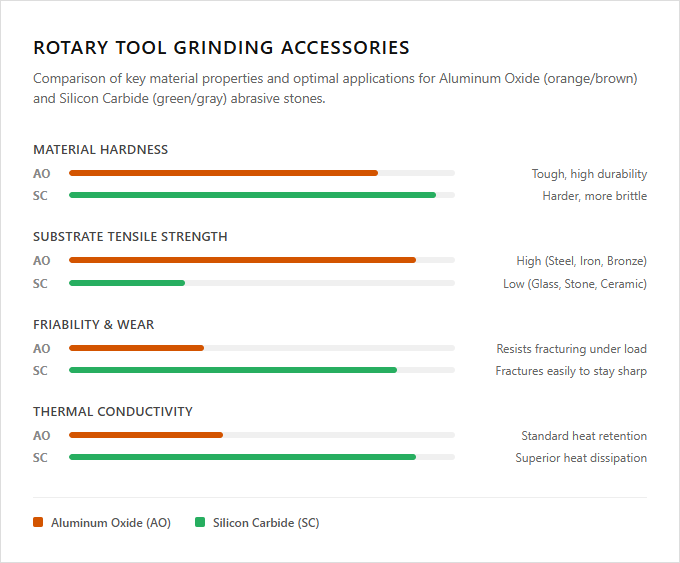
| Material Hardness | Silicon carbide is harder and more brittle than aluminum oxide on the Mohs hardness scale, making it highly effective for grinding extremely hard surfaces. |
| Target Substrates | Aluminum oxide is designed for high-tensile strength metals like steel and iron, whereas silicon carbide is preferred for low-tensile materials such as glass, stone, and ceramics. |
| Friability and Wear | Silicon carbide exhibits high friability, fracturing easily under pressure to expose new sharp cutting edges, while tough aluminum oxide grains resist fracturing during heavy-duty grinding. |
| Thermal Conductivity | Silicon carbide features superior thermal conductivity, which minimizes heat buildup and prevents thermal degradation on sensitive workpieces compared to aluminum oxide. |
| Accessory Color Coding | Rotary tool manufacturers typically color-code aluminum oxide grinding stones as orange or brown, whereas silicon carbide grinding stones are colored green or gray. |
Tensile Strength Dictates Aluminum Oxide vs. Silicon Carbide
When selecting abrasive accessories for a rotary tool, the ultimate tensile strength of the target workpiece is the primary deciding factor. Aluminum oxide is the industry standard for processing high-tensile materials. Its durable grains resist fracturing under heavy pressure, making it highly effective for grinding, deburring, and shaping tough ferrous alloys, alloy steels, and structural metals.
Silicon carbide is preferred for low-tensile strength materials and non-ferrous substances. This extremely hard abrasive cuts cleanly through cast iron, brass, aluminum, glass, stone, and plastics without excessive heat buildup. Professional metalworkers and industrial fabricators frequently rely on aluminum oxide for heavy-duty steel welding preparation, while stone carvers, glass artists, and jewelry makers favor silicon carbide for delicate engraving and non-metal refining.
Self-Sharpening Silicon Carbide in Micro-Machining
Rotary tool users often select between aluminum oxide and silicon carbide based on workpiece hardness and finishing requirements. Silicon carbide exhibits high friability, enabling rapid micro-fracturing to maintain sharp cutting edges during precision micro-machining. This self-sharpening mechanism ensures consistent material removal when grinding exceptionally hard, non-metallic surfaces such as glass, stone, and ceramics.
Aluminum oxide, by comparison, possesses higher durability and resists fracturing under heavy loads, making it ideal for high-tensile metals. Aluminum oxide is best suited for general fabricators and automotive restorers tackling heavy steel grinding, while silicon carbide is preferred by precision lapidaries, glass engravers, and detail-oriented crafters working with delicate, brittle materials.
Aluminum Oxide Prevents Diffusion Wear in Steel Grinding
When selecting rotary tool accessories for grinding, the choice between aluminum oxide and silicon carbide depends on the workpiece material. Aluminum oxide is the industry standard for ferrous metals such as steel. During high-speed rotary grinding, intense thermal energy can cause chemical reactions between the abrasive and the metal. Aluminum oxide possesses a low chemical affinity for ferrous metals, which prevents diffusion wear and maintains the integrity of the abrasive wheel under extreme heat.
Silicon carbide features extremely sharp, hard grains suited for non-ferrous metals, stone, glass, and ceramics. This material fractures easily to expose new cutting edges, making it ideal for brittle substrates. Metalworkers and fabricators processing structural steel benefit most from aluminum oxide, while artisans, glass engravers, and stone carvers require the sharp, friable nature of silicon carbide.
Silicon Carbide: Ideal for Grinding Ceramics and Glass
When selecting rotary tool accessories for grinding and shaping, understanding the material properties of the abrasive is essential. Aluminum oxide serves as the industry standard for high-tensile strength metals like steel and iron. Silicon carbide possesses superior Knoop hardness, making it ideal for grinding extremely hard, non-metallic substrates like ceramics and glass. This brittle abrasive fractures during use to continuously expose new, sharp cutting edges on dense surfaces.
Selecting the correct abrasive optimizes project efficiency and ensures clean, precise finishes on the workpiece. DIY hobbyists and general metalworkers will find aluminum oxide ideal for steel fabrication, whereas professional glass artisans and stone carvers require the specialized hardness of silicon carbide.
Silicon Carbide Conductivity Prevents Workpiece Burning
When selecting rotary tool accessories, choosing between aluminum oxide and silicon carbide depends entirely on the material properties of your workpiece. Aluminum oxide is highly durable and ideal for grinding high-tensile strength metals such as carbon steel, alloy steel, and malleable iron.
For harder or more brittle materials, silicon carbide is the superior choice. The high thermal conductivity of silicon carbide reduces thermal loading and prevents burning in the heat-affected zone of the workpiece, which preserves the structural integrity of sensitive materials like glass, stone, and ceramics.
General metalworkers and DIY enthusiasts tackling steel fabrication projects should opt for aluminum oxide, while precision artisans, glassworkers, and stone carvers requiring cool-cutting performance on delicate materials are best suited for silicon carbide.
Matching Wheel Grade and Grain Optimizes Self-Dressing
In precision rotary grinding, selecting between aluminum oxide and silicon carbide requires careful synchronization of the grain chemistry with the wheel grade and vitrified bond matrix. For aluminum oxide, a medium-to-hard vitrified bond ensures that the friable grains fracture at the correct rate, maintaining sharpness when grinding high-tensile materials. Silicon carbide, which is harder but more brittle, demands a softer, precisely calibrated bond matrix to release dull grains and expose fresh cutting edges during low-tensile grinding. This exact matching of bond hardness to abrasive friability optimizes the self-dressing cycle, preventing both premature wheel wear and thermal damage to the workpiece.
Machinists working with high-tensile ferrous alloys require aluminum oxide for its durability and resistance to wear, whereas technicians shaping non-ferrous metals, ceramics, or glass rely on silicon carbide for its sharp cutting capability on extremely hard surfaces.
How Elastic Modulus Affects Grinding Grain Deflection
When selecting rotary tool abrasive accessories, the physical properties of aluminum oxide and silicon carbide dictate their performance. The modulus of elasticity plays a critical role in how each material responds to force. Aluminum oxide possesses a lower modulus of elasticity, allowing for greater elastic deformation. This capacity for grain deflection absorbs high mechanical stress, providing exceptional toughness and resistance to fracturing under heavy grinding loads.
Silicon carbide is extremely hard but brittle, featuring a high modulus of elasticity that resists deflection and leads to rapid fracturing under pressure. This characteristic ensures a continuously sharp cutting surface on low-tensile materials like glass, stone, and ceramics. Metalworkers demanding durable stock removal on steel will benefit most from aluminum oxide, while artisans and glass engravers requiring precision on brittle substrates should opt for silicon carbide.
Leave a comment