
Many workshop operators struggle with a frustrating drop in suction at their dust collector's port, a common pain point caused by cumulative static pressure loss. Traditionally, woodworkers attempt to remedy this by investing in costly collector upgrades or completely redesigning their ductwork layouts. However, optimizing your current system with the right blast gates acts like an efficiency grant, reclaiming lost CFM and maximizing your tool's performance without the expense of a larger motor.
As a critical stipulation, note that premium blast gates cannot compensate for an inherently undersized main line. Yet, replacing leaky ABS plastic gates with precision-fit cast aluminum gates in high-demand runs dramatically minimizes air bypass. In this guide, we will analyze the physical differences between plastic and aluminum gates, examine how seal integrity affects static pressure, and outline how to select the optimal hardware for your shop's ductwork.
| Factor | Summary |
|---|---|
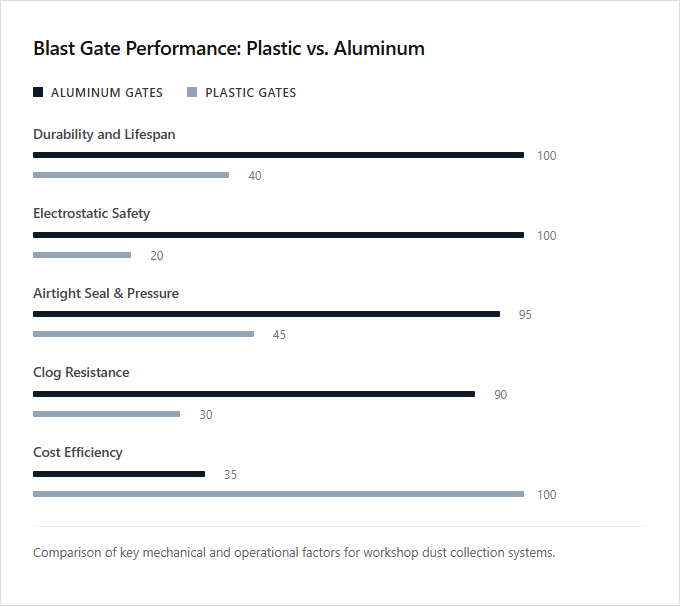
| Durability and Lifespan | Aluminum blast gates resist abrasive wear far better than ABS plastic alternatives, which are prone to cracking under high mechanical stress. |
| Electrostatic Accumulation | Aluminum gates easily facilitate electrostatic dissipation when grounded, whereas non-conductive plastic gates can build up static charges. |
| Airtight Seal and Pressure | Precision-machined aluminum gates minimize volumetric airflow loss, while flexible plastic gates may warp and cause significant static pressure drops. |
| Clog Resistance | Self-cleaning aluminum gates feature a bypass slot that prevents sawdust compaction in the groove, a common failure point in enclosed plastic gates. |
| Cost Efficiency | Plastic blast gates offer an economical solution for budget-conscious workshops, whereas aluminum models require a higher initial capital investment. |
Surface Roughness and Skin Friction: Aluminum vs. Plastic
When designing an efficient dust collection system, the choice between plastic and aluminum blast gates significantly impacts airflow dynamics. The primary differentiator lies in the internal surface roughness height of the materials. Molded plastic gates feature an extremely smooth internal finish, minimizing the boundary layer skin friction coefficient to maintain optimal static pressure. Cast aluminum gates possess a higher surface roughness inherent to the casting process, which increases skin friction, thickens the boundary layer, and introduces minor turbulence.
Mechanical durability also varies between these materials, as aluminum resists abrasive wear better than plastic. Budget-conscious hobbyists seeking maximized airflow in small workshops benefit most from smooth plastic gates, whereas commercial operators prioritizing rugged, long-term durability in high-volume systems should opt for cast aluminum.
Vacuum Deflection and Leakage in Plastic Gate Housings
In high-performance dust collection systems, the choice between blast gate materials directly impacts pneumatic efficiency. Plastic blast gates are highly susceptible to structural deflection when subjected to high static vacuum pressure. Under intense suction, the polymer housings flex inward, compromising the internal sliding seals. This physical deformation creates pathways for ambient air infiltration, which decreases static pressure and reduces the overall volumetric flow rate needed to capture fine wood dust.
Cast aluminum blast gates provide the rigidity necessary to resist deflection under extreme vacuum loads. This structural integrity prevents housing distortion, ensuring a reliable seal that maintains maximum CFM throughout the ductwork. While budget-conscious hobbyists utilizing low-vacuum hobby systems often find plastic gates sufficient, professional woodworkers and CNC operators requiring consistent, high-capacity extraction must rely on durable aluminum gates.
Grounded Aluminum Blast Gates Prevent Dust Buildup
In industrial and workshop dust collection systems, the choice between plastic and aluminum blast gates significantly impacts long-term airflow efficiency. While plastic gates are cost-effective, they are prone to static electricity buildup, which attracts fine dust particles to the gate slide. Grounded aluminum blast gates actively dissipate electrostatic charges, preventing localized particulate accumulation that restricts airflow over time.
Aluminum components also offer superior structural integrity under high vacuum pressure and resist the abrasive wear of high-velocity debris. Non-conductive plastic gates, by contrast, can become clogged or seize due to static-cling dust. Budget-conscious hobbyists operating small, intermittent shops benefit from affordable plastic gates, whereas professional woodworkers running high-volume, grounded metal ductwork require the reliability of aluminum gates.
Precision Gate Tolerances Minimize Air Leakage
In dust collection systems, the choice between plastic and aluminum blast gates significantly impacts overall airflow efficiency. Aluminum gates offer superior structural integrity and performance under high static pressure. Specifically, the precision-machined slide tolerances in aluminum gates minimize the minor loss coefficient associated with air leakage, ensuring maximum static pressure is maintained at the active tool source.
Plastic blast gates provide a cost-effective, corrosion-resistant alternative for smaller workshops, though they are more susceptible to flexing and air bypass over time. Budget-conscious hobbyists operating light-duty, single-user garages will find plastic gates highly adequate, while commercial operators and high-volume professionals requiring maximum CFM preservation should invest in robust aluminum gates.
Self-Cleaning Bypass Slots Prevent Gate Debris Compaction
When designing an efficient workshop dust collection system, the choice between plastic and aluminum blast gates significantly impacts long-term performance. While plastic gates offer an economical entry point, they often suffer from debris accumulation within the slide tracks, leading to air leaks. In contrast, premium aluminum blast gates feature self-cleaning bypass slots. This specialized design allows fine dust and wood chips to escape through the back of the gate rather than compacting in the groove, ensuring a complete, airtight closure and maintaining optimal seal integrity.
The structural rigidity of aluminum also prevents housing flex under high static pressure, preserving consistent suction throughout the ductwork. Budget-conscious hobbyists with light-duty, intermittent shops will find plastic gates sufficient, whereas professional woodworkers and high-volume production facilities requiring maximum airflow efficiency and maintenance-free durability should invest in aluminum blast gates.
Minimizing Flow Losses in Aluminum Blast Gates
When engineering an efficient dust collection system, the design of your blast gates directly impacts static pressure. Aluminum blast gates offer superior aerodynamic performance compared to plastic alternatives. High-quality aluminum gates feature gradual transitions and matched internal diameters that align precisely with ducting. This optimized geometry minimizes sudden expansion and contraction losses, preserving air velocity throughout the system.
Plastic gates often introduce turbulence due to abrupt internal steps and wider manufacturing tolerances. Budget-conscious hobbyists with small, flexible-hose layouts typically benefit from affordable plastic gates, while professional woodworkers operating high-capacity, rigid-ducted networks require the durability and efficiency of aluminum gates.
Aluminum Wear Resistance Limits Frictional Head Loss
When designing a high-efficiency dust collection system, the choice between plastic and aluminum blast gates significantly impacts long-term airflow performance. Wood dust and abrasive debris traveling at high velocities act as an internal sandblaster, gradually eroding duct components. Aluminum blast gates offer superior abrasive wear resistance, preserving their internal surface profile over years of heavy use. This material durability prevents the pitting that occurs in plastic, which limits long-term frictional head loss and maintains optimal static pressure.
Plastic gates are cost-effective but prone to structural deformation and rapid wear under abrasive loads. Aluminum alternatives provide a robust, airtight seal that withstands the physical demands of high-volume extraction. Budget-conscious hobbyists operating small workshops typically benefit from plastic gates, whereas professional woodworkers and high-production shops requiring maximum system efficiency should invest in durable aluminum blast gates.
Leave a comment