
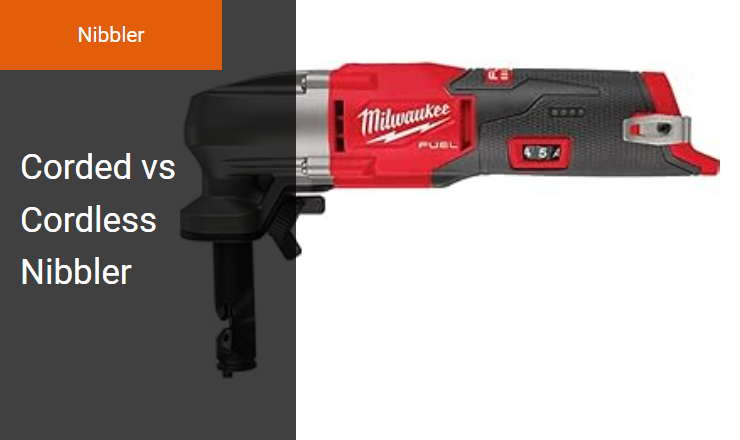
Achieving clean, distortion-free curves in sheet metal fabrication is a persistent challenge, often leaving fabricators struggling with warped workpieces, hand fatigue, and jagged edges. While standard workshop procurement routes and capital equipment budgets typically prioritize heavy machinery like stationary shears, investing in a high-quality hand-held nibbler is the true key to versatile, onsite precision. This specialized tool grants operators unparalleled cutting maneuverability without bending the host material, serving as a proven solution for demanding applications like HVAC ducting installation and architectural metal paneling.
However, maximizing your workshop's efficiency requires careful planning, with the stipulation that a nibbler's performance hinges entirely on matching the power delivery to your specific workflow. In this article, we will analyze the critical trade-offs between corded and cordless nibblers, comparing their power output, runtime, and maneuverability to help you choose the best tool for your precision fabrication needs.

| Factor | Summary |
|---|---|
| Power Source & Mobility | Cordless nibblers utilize high-density lithium-ion batteries for superior maneuverability, whereas corded models rely on a continuous alternating current power supply that restricts portability. |
| Strokes Per Minute (SPM) | Corded nibblers maintain a consistent cutting velocity measured in strokes per minute, while cordless units may exhibit performance drops as battery voltage decreases. |
| Material Thickness Capacity | Corded tools generally possess higher wattage motors capable of shearing low-carbon steel up to 10-gauge thickness, whereas cordless models are typically limited to lighter gauges. |
| Ergonomics and Weight | Without the added mass of a battery pack, corded nibblers offer a more favorable power-to-weight ratio that reduces operator fatigue during extended operations. |
| Runtime and Duty Cycle | Corded nibblers support an unlimited duty cycle for continuous production, while cordless alternatives are constrained by battery amp-hour capacity and recharge intervals. |
Corded Constant SPM vs. Cordless Variable Speed
Corded metal nibblers are engineered for high-demand fabrication, leveraging a direct electrical connection to deliver a constant strokes per minute (SPM) output. This sustained power ensures that the tool maintains its cutting momentum and velocity even when processing thick sheet metals, preventing stalling during prolonged, heavy-duty operations.
Cordless nibblers offer enhanced maneuverability paired with variable speed control. By allowing operators to adjust the cutting speed dynamically, these battery-powered units provide the precise control necessary for navigating tight radiuses, intricate patterns, and delicate materials without causing edge distortion.
Industrial workshop fabricators undertaking continuous, straight cuts on heavy-gauge stock will achieve maximum efficiency with corded models, while roofing contractors and HVAC technicians requiring on-site mobility and fine control over complex shapes are ideally suited for cordless alternatives.
How Battery Ah Determines Cordless Tool Runtime
When selecting a sheet metal nibbler, the choice between corded and cordless models often hinges on operational runtime. Cordless nibblers provide exceptional mobility, yet their performance is strictly limited by battery capacity, measured in Amp-hours (Ah). A higher Ah rating extends the tool's working window, but demanding applications can rapidly drain the cell, requiring planned interruptions for battery swaps.
In contrast, corded nibblers offer unlimited runtime and consistent cutting force because they draw continuous power directly from an electrical outlet. Corded models are best suited for industrial fabricators who require uninterrupted operation in a fixed workshop, whereas cordless nibblers are ideal for service technicians who prioritize portability for quick, on-site modifications.
Unrestricted maneuverability and tighter minimum cutting radius of cordless designs
When selecting between corded and cordless sheet metal nibblers, maneuverability is a primary differentiator. Cordless designs excel in dynamic workspaces, offering unrestricted movement free from the limitations of power cords. This physical freedom directly translates to a tighter minimum cutting radius, allowing operators to execute intricate curves, sharp angles, and complex profiles in sheet metal with superior precision and control.
Corded models provide consistent, uninterrupted power ideal for continuous, heavy-duty applications, though they sacrifice some agility in confined or overhead spaces. Professional roofers and HVAC installers requiring maximum agility on-site will benefit most from cordless designs, while high-volume workshop fabricators doing repetitive linear cuts are best suited for corded options.
Corded Endurance vs. Cordless Thermal Shutdown
When selecting a sheet metal nibbler, power delivery significantly influences productivity and tool longevity. Corded nibblers excel in high-demand environments due to their continuous duty cycle. Operating on a direct electrical connection, these tools maintain consistent cutting power indefinitely without the risk of performance degradation, making them indispensable for prolonged, uninterrupted fabrication.
Cordless nibblers offer unmatched portability but are constrained by battery heat buildup. During intensive cutting, the high current draw can trigger thermal overload protection, resulting in automatic shutdowns to protect the motor and electronics. Corded models are best suited for workshop fabricators requiring relentless, heavy-duty production, while cordless variants are ideal for field technicians needing quick, highly mobile cuts on-site.
How Brushless Efficiency Impacts Cordless Power-to-Weight
Metalworking nibblers are essential for distortion-free sheet metal cutting, with the choice between corded and cordless models often dictating project efficiency. Corded nibblers provide uninterrupted power and consistent performance, making them highly reliable for continuous, heavy-duty workshop fabrication.
Modern cordless nibblers bridge the performance gap through advanced brushless motors. These motors eliminate mechanical friction, significantly improving energy efficiency and thermal management. This optimization allows manufacturers to reduce battery size while maintaining high torque, resulting in an exceptional power-to-weight ratio that rivals corded alternatives without sacrificing maneuverability.
Stationary fabricators requiring limitless runtime benefit most from the corded variant, whereas roofing contractors and field technicians prioritizing overhead mobility find the lightweight, cordless brushless model ideal.
Maximum cutting capacity differences across high-tensile steel sheet metal gauges
Corded nibblers consistently deliver superior cutting capacities when working with high-tensile steel. Heavy-duty corded models reliably slice through thicker profiles, such as 10 to 12-gauge high-tensile sheet metal, without experiencing voltage drops or loss of torque. In contrast, cordless nibblers, while highly portable, typically max out at lighter gauges, often restricted to 14 to 18-gauge high-tensile steel to prevent rapid battery depletion and motor strain under intense resistance.
The uninterrupted power supply of corded units maintains a steady stroke rate under load, ensuring clean, deformation-free edges on demanding alloys. Cordless alternatives utilize advanced brushless motors to close this performance gap, yet they remain limited during sustained, high-torque operations. High-production industrial fabricators requiring continuous heavy-gauge cutting will benefit most from corded models, while field technicians and roofers needing quick, maneuverable cuts on lighter gauges are better served by cordless versatility.
Rotating Die Configurations for Intricate Scroll Cutting
When executing intricate scroll cutting on sheet metal, both corded and cordless nibblers rely heavily on precise die clearance and 360-degree rotating die head configurations. The adjustable rotating head allows operators to maneuver through tight curves and complex patterns without twisting the entire tool body. Corded nibblers provide continuous, uncompromised power, ensuring consistent stroke speed and clean die clearance through thicker gauges during extended fabrication sessions. Conversely, cordless models offer unparalleled portability, allowing the rotating head to navigate awkward angles in the field without the interference of a power cord.
Maintaining the correct die clearance remains critical in both formats to prevent material burring and premature tool wear during tight radius work. Corded nibblers are best suited for workshop-based metal fabricators requiring uninterrupted power for heavy-duty production, while cordless nibblers are ideal for on-site installers and contractors who prioritize mobility and quick, intricate adjustments in diverse locations.
Leave a comment