
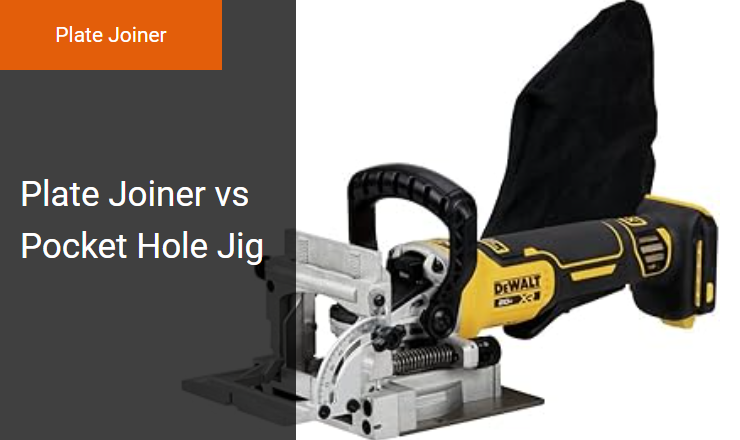
Achieving perfectly flush joints without compromising the structural or aesthetic integrity of a workpiece is a persistent challenge for woodworkers of all skill levels. Before investing in specialized machinery, builders often rely on standard funding sources-such as workshop capital reserves or client project deposits-to procure basic hardware and traditional fasteners.
However, incorporating a plate joiner into your workflow grants the unique advantage of rapid, invisible, and self-aligning wood-to-wood connections. As a stipulation, it is important to note that while biscuit joinery excels at alignment, it is not designed for primary structural load-bearing applications. Even so, for projects like seamless oak tabletops or custom cabinet face frames, its precision is unmatched.
This comprehensive guide compares the plate joiner against the pocket hole jig, evaluating their strength, setup speeds, and visual outcomes to help you select the optimal joinery method for your next commission.
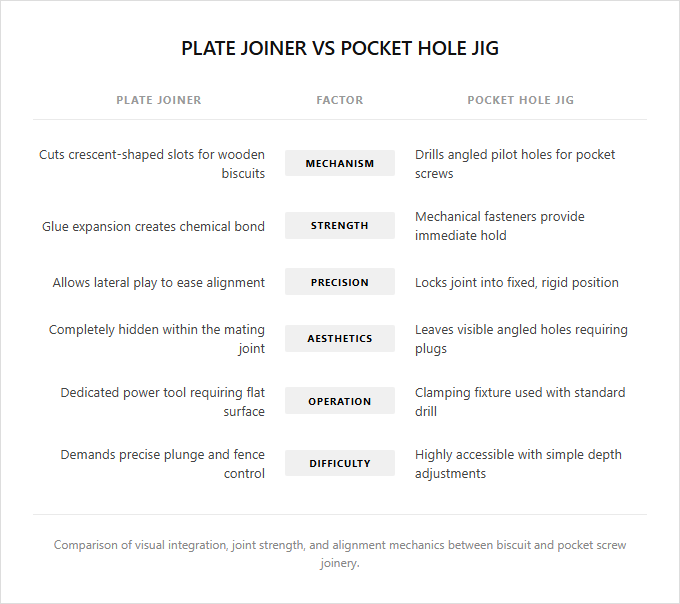
| Factor | Summary |
|---|---|
| Joinery Mechanism | While a plate joiner uses a spinning carbide-tipped blade to cut crescent-shaped slots for wooden biscuits, a pocket hole jig utilizes a specialized drill guide to create angled pilot holes for pocket screws. |
| Joint Strength | Pocket hole joinery relies on mechanical fasteners for immediate high tensile strength, whereas biscuit joinery relies on wood glue expansion within the slot to create a strong chemical bond. |
| Alignment Precision | Plate joiners allow for lateral play during assembly to ease alignment of flush edges, while pocket hole jigs lock pieces into a fixed position with minimal room for micro-adjustments. |
| Joint Aesthetics | Biscuit joints remain completely hidden inside the mating workpieces, whereas pocket holes leave visible angled recesses on the workpiece surface that require pocket plugs to conceal. |
| Tool Operation | A plate joiner is a dedicated, handheld power tool requiring a flat reference surface, whereas a pocket hole jig is a manual clamping fixture used in conjunction with a standard power drill. |
| Learning Curve | Pocket hole jigs offer a highly accessible entry point for beginners due to simple depth-stop collar adjustments, while plate joiners demand precise plunge control and fence calibration to prevent misalignment. |
Biscuit Joiners vs. Pocket Holes: Glue vs. Screws
Plate joiners, commonly referred to as biscuit joiners, create joints by cutting mating slots into adjacent wood pieces to receive a compressed wooden biscuit. This method relies entirely on adhesive bonding and wood expansion, as moisture from the wood glue causes the biscuit to swell and lock securely within the slots, resulting in a flush, seamless alignment without visible fasteners.
In contrast, pocket hole jigs utilize mechanical self-tapping screws driven at an angle into pre-drilled pocket holes to clamp the wood faces together. This approach provides immediate, high-strength holding power and eliminates clamp waiting times during assembly. Fine woodworkers seeking seamless, hidden alignments for tabletop glue-ups favor plate joiners, while production-focused cabinetmakers and utility builders prioritizing assembly speed and mechanical strength prefer pocket hole jigs.
Adjustable Plate Joiners vs. Fixed Pocket Holes
Selecting the appropriate joinery method is critical for achieving structural precision and ease of assembly. A plate joiner cuts crescent-shaped slots that accommodate mating wooden biscuits. This system provides valuable lateral alignment play along the joint line, allowing craftspeople to make minor slide adjustments and perfectly flush the wood faces before the adhesive cures.
A pocket hole jig utilizes angled guide holes to drive self-tapping screws directly from one workpiece into another. This mechanical fastening locks the workpiece into a fixed position immediately, eliminating any opportunity for post-clamping movement. Plate joiners are ideal for traditional woodworkers seeking seamless, adjustable alignment in tabletop glue-ups, while pocket hole jigs suit speed-oriented builders prioritizing rapid, hardware-reinforced cabinet construction.
Pocket Holes vs. Biscuits: Comparing Joinery Strengths
When selecting joinery methods, understanding the mechanical advantages of plate joiners versus pocket hole jigs is essential for structural integrity. Pocket hole joinery utilizes angled screws to deliver superior immediate tensile strength, drawing wood components tightly together without the need for extended clamping. Biscuit joinery, meanwhile, employs compressed wooden plates that expand with moisture to increase shear strength and effectively prevent cupping across flush-aligned panels.
Pocket hole jigs are ideal for production-focused woodworkers constructing cabinet face frames, whereas plate joiners are best suited for precision craftsmen seeking seamless tabletop alignments.
Biscuit Joints Need Clamping; Pocket Holes Self-Clamp
When selecting between a plate joiner and a pocket hole jig, the primary mechanical distinction lies in how the joints are secured during assembly. A plate joiner cuts slots for wooden biscuits, which rely on adhesive to bond the workpieces. Because the biscuit swells with glue, the assembly requires external clamping pressure to remain aligned during the curing cycle.
A pocket hole jig utilizes angled screws to draw the wood pieces together mechanically. These fasteners provide immediate strength and act as a self-clamping joint, eliminating the need for external clamps during assembly. Plate joiners are ideal for traditional woodworkers prioritizing seamless, invisible alignment, whereas pocket hole jigs are best suited for cabinetmakers and hobbyists requiring rapid, high-strength construction.
Plate Joiners vs. Pocket Hole Jigs: Hidden vs. Exposed
Choosing between a plate joiner and a pocket hole jig depends on the aesthetic and structural requirements of your woodworking project. A plate joiner utilizes a spinning circular blade to cut a hidden, crescent-shaped slot internally into the mating edges of the wood, which accommodates a compressed wooden biscuit. In contrast, a pocket hole jig guides a drill bit to create an exposed, angled recess on the face or edge of the workpiece, secured with specialized screws that often require matching pocket plugs for concealment.
Both methods offer strong, reliable alignment, but they serve different assembly workflows. Fine furniture makers prioritizing seamless, invisible joints typically favor the plate joiner, while cabinetry installers and DIYers seeking rapid, mechanically fastened frame construction benefit most from the speed and utility of the pocket hole jig.
How Expanding Beechwood Biscuits Lock Joints
Choosing between a plate joiner and a pocket hole jig depends on the mechanical nature of the connection. A plate joiner utilizes compressed beechwood biscuits that expand upon absorbing water-based wood glue, creating a chemically bonded, tight-fitting internal lock within the wood fibers. In contrast, pocket hole jigs rely on non-expanding steel fasteners to mechanically clamp the joint together, providing immediate holding power without organic integration.
While steel screws offer fast assembly for structural cabinetry, the expanding biscuit provides superior alignment control and a seamless, invisible finish. Plate joiners are best suited for furniture makers seeking seamless, flush alignments on wide panels, whereas pocket hole jigs are ideal for utility woodworkers prioritizing rapid assembly and strong, mechanical joints.
Setup Differences: Pocket Hole Jigs vs. Plate Joiners
When joining timber, choosing between a plate joiner and a pocket hole jig depends heavily on your preferred setup workflow. Pocket hole jigs require precise calibration of the drilling guide and drill collar based on material thickness to ensure the screw seats correctly. In contrast, plate joiners rely on fence height and plunge depth settings to cut mating slots, allowing for minor lateral adjustments during assembly.
This technical difference dictates both the speed and the aesthetic of the final workpiece. Pocket hole jigs are ideal for utility builders and cabinet makers who prioritize rapid, mechanical fastening, while plate joiners are suited for fine furniture makers focusing on seamless alignment and completely concealed joints.
Leave a comment