
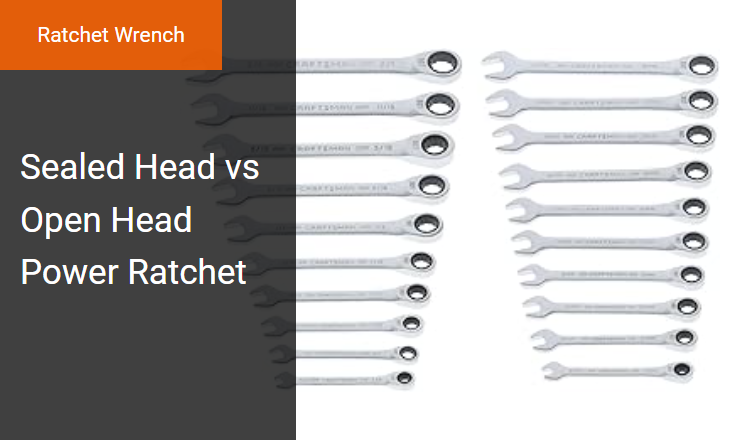
Navigating the cramped, grease-slicked confines of modern engine bays presents a constant struggle for automotive technicians, who frequently battle tool failure in tight spaces. While professionals historically relied on traditional pneumatic lines or standard open-head cordless options, these legacy defaults often fall short under heavy daily use. Upgrading to a high-caliber cordless ratchet wrench resolves these mobility issues and grants mechanics unprecedented durability and speed during complex repairs. However, this upgrade comes with an educational stipulation: raw torque is secondary to how a tool's head design handles your specific working environment-such as abrasive road grit on undercarriage suspensions or tight clearances near delicate engine blocks.
This article provides a comparative breakdown of sealed head versus open head configurations, analyzing their debris resistance, clearance profiles, and long-term maintenance needs to help you select the ideal power tool for your workshop.

| Factor | Summary |
|---|---|
| Debris Resistance | Sealed heads prevent the ingress of foreign contaminants into the internal ratcheting mechanism, whereas open heads are highly susceptible to dust and metal shavings. |
| Maintenance Requirements | Open head designs facilitate easy cleaning and manual lubrication of the drive yoke, while sealed heads are permanently lubricated but more complex to disassemble. |
| Tool Profile and Clearance | Open head power ratchets feature a slimmer profile for superior clearance in confined automotive spaces, unlike the bulkier housing of sealed head models. |
| Torque Transfer | Sealed head ratchets typically house heavy-duty gearboxes that efficiently transfer maximum torque without mechanism slippage under high loads. |
| Heat Dissipation | The open head configuration allows rapid thermal dissipation during high-duty cycles, whereas sealed enclosures tend to retain heat. |
| Component Longevity | A sealed head architecture shields critical internal components like the anvil and pawl from moisture and wear, extending the tool's overall service life. |
Ingress Protection rating and environmental sealing against corrosive automotive fluids
When selecting a cordless power ratchet, the choice between a sealed head and an open head design directly impacts tool longevity. Sealed head power ratchets feature specialized gaskets that provide superior Ingress Protection (IP) ratings, shielding the internal gearing from corrosive automotive fluids like brake fluid, coolants, and motor oil. This robust environmental sealing prevents chemical degradation of the internal mechanism and ensures consistent performance under the hood.
Open head designs lack these protective barriers, exposing the drive yoke and gears to ambient debris and liquid contaminants. While this open architecture allows for easier manual lubrication and a slimmer profile, it leaves the tool vulnerable to fluid ingress. Sealed head models are ideal for professional diesel and automotive technicians working in fluid-heavy under-car environments, whereas open head ratchets are best for benchtop assemblers who prioritize tool slimness in dry workspaces.
Head profile clearance dimensions in confined engine compartments
In tight engine bays, head profile clearance is a critical factor when choosing between sealed and open head power ratchets. Open head designs generally feature a slimmer, more compact profile, allowing them to slip easily into the narrowest gaps between engine components and firewalls. Conversely, sealed head ratchets require a slightly bulkier housing to protect internal gears from debris, which increases their clearance dimensions and can limit access in highly congested areas.
These structural differences directly impact tool accessibility and durability depending on the working environment. High-volume automotive technicians working on modern, tightly packed passenger vehicles typically favor the agility of the open head, whereas heavy equipment mechanics operating in harsh, debris-heavy environments benefit more from the rugged protection of the sealed head design.
Maintenance frequency and lubrication requirements of the exposed pawl mechanism
Open head power ratchets feature an exposed pawl mechanism that requires frequent maintenance. Because dirt, metal shavings, and moisture easily penetrate the open casing, regular cleaning and lubrication are essential to prevent premature wear. Operators must apply light machine oil to the pawl and gear teeth frequently to ensure smooth operation and prevent binding.
Sealed head power ratchets enclose the internal drive components, shielding them from environmental contaminants. This design drastically reduces maintenance frequency, as the factory grease remains trapped inside, requiring only occasional servicing. Open head models are best suited for automotive technicians who prefer quick, hands-on tool maintenance, while sealed head ratchets are ideal for industrial operators in dirty environments who require maximum uptime with minimal tool care.
Torque Capacity and Rigidity of the Ratcheting Yoke
The design of a power ratchet's head directly influences its performance under load. Sealed head cordless ratchets feature an enclosed mechanism that provides superior structural rigidity. This reinforced, solid yoke design minimizes mechanical flex, allowing the tool to withstand greater maximum torque capacity without compromising the internal drive components.
Open head power ratchets utilize an exposed yoke structure. While this configuration facilitates easier maintenance, the open architecture offers less resistance to twisting forces, resulting in a lower peak torque threshold under extreme stress. Heavy-duty industrial mechanics requiring maximum torque and durability benefit most from sealed head designs, whereas technicians working in clean, light-duty assembly environments will find the open head style highly efficient.
Wear Longevity of Internal Gears and Drive Anvils
Sealed head power ratchets feature an enclosed mechanism that prevents debris, dust, and moisture from entering the ratchet head. This protective barrier significantly reduces abrasive wear on the internal gear teeth and the drive anvil, maintaining precise tolerances and extending the tool's overall service life in harsh conditions.
Open head designs allow easier access for manual lubrication and routine cleaning of the internal components, though they remain more vulnerable to environmental contaminants that can accelerate gear degradation over time. Heavy-duty industrial mechanics working in debris-heavy environments benefit most from the low-maintenance durability of sealed heads, while precision technicians who prefer routine, hands-on tool maintenance typically select open-head models.
Integration compatibility with high-efficiency brushless motor technology
Sealed head power ratchets are engineered to protect internal gear mechanisms from debris, making them highly compatible with high-efficiency brushless motors. The enclosed design maintains consistent internal lubrication, which complements the high torque output and sustained thermal efficiency of brushless technology by preventing contaminants from degrading the motor-to-anvil energy transfer.
In contrast, open head power ratchets offer a slimmer profile and rapid heat dissipation, though they require more frequent maintenance when paired with high-torque brushless systems. While this open architecture allows for quick visual inspections, it exposes the drive components to workshop particulates over time. Sealed head models are ideal for heavy-duty industrial technicians working in high-debris environments, whereas open head ratchets suit precision mechanics prioritizing tool clearance in clean assembly bays.
Maximum rotational speed measured in RPM under varying mechanical loads
Sealed head power ratchets protect internal gears from debris, preserving consistent rotational speed under heavy mechanical loads. While the protective seals introduce minor friction that slightly limits maximum unloaded RPM, these tools maintain stable velocity and torque when encountering resistance in harsh environments.
In comparison, open head power ratchets feature less internal resistance, allowing them to achieve higher peak unloaded RPM for rapid fastening. Under load, exposure to dust and contaminants can cause sudden speed degradation, making their performance more variable in demanding conditions.
High-RPM open head models are ideal for assembly line technicians prioritizing speed in clean environments, whereas durable sealed head ratchets are best suited for automotive mechanics working in debris-heavy, high-torque settings.
Leave a comment