
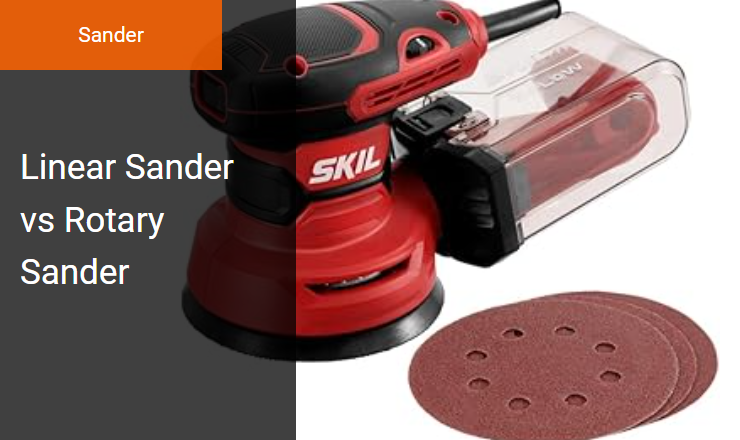
Achieving a flawless finish on intricate wood profiles without eroding crisp details or spending hours on tedious hand-sanding is a persistent frustration for professional refinishers. Historically, workshops have relied on standard orbital sanders or manual blocks to bridge this gap, accepting the compromise of slow production times or uneven surface wear. However, investing in specialized machinery-such as linear or rotary sanders-grants craftsmen unmatched efficiency and surface integrity.
Crucially, this upgrade comes with a stipulation: tool utility is strictly dictated by motion dynamics, meaning neither tool serves as a universal solution. For example, restoring delicate historic crown molding requires the precise, reciprocating stroke of a linear sander, whereas rapid material removal on flat oak slabs demands the aggressive rotational power of a rotary sander. Below, we break down the mechanics, ideal applications, and key differences between these two powerful technologies to help you select the optimal tool for your shop.

| Factor | Summary |
|---|---|
| Motion Profile | Linear sanders utilize a back-and-forth reciprocating stroke to mimic hand-sanding along the grain, whereas rotary sanders employ high-speed orbital rotation to remove material. |
| Material Removal Rate | Rotary sanders deliver a much higher rate of stock removal due to continuous rotational kinetic energy, while linear sanders offer controlled abrasion suited for delicate profiling. |
| Surface Finish Quality | Linear sanders excel at grain-aligned finishing without leaving swirl marks, whereas rotary sanders can produce circular scratch patterns if the random-orbit mechanism is compromised. |
| Primary Application | Linear sanders are engineered for detail work in grooves, rabbets, and profiles, while rotary sanders are optimized for rapid leveling of expansive, flat workpieces. |
| Abrasive Media | Linear sanders typically require custom-profile pads with specialized abrasive strips, whereas rotary sanders utilize standardized, ventilated hook-and-loop circular sanding discs. |
Reciprocating linear stroke motion versus high-RPM rotational velocity
Linear sanders operate utilizing a reciprocating linear stroke motion, moving the abrasive pad back and forth along a straight path. This directional movement aligns precisely with the wood grain, minimizing cross-grain scratching and ensuring an exceptionally smooth, uniform finish on flat surfaces and detailed profiles.
Rotary sanders employ high-RPM rotational velocity, spinning the disc rapidly to maximize material removal rates. This high-speed circular motion delivers the necessary kinetic energy for aggressive stock reduction, leveling uneven joints, and stripping tough coatings efficiently.
Detail-oriented woodworkers focusing on flawless fine finishing require the grain-aligned precision of a linear sander, whereas construction renovators and fabricators seeking rapid material removal benefit most from the high-velocity rotary model.
Micro-detailing of complex profiles versus aggressive bulk material removal rate
Linear sanders utilize a precise back-and-forth reciprocating motion, making them highly effective for the micro-detailing of complex profiles and delicate grain patterns. This controlled linear stroke accesses tight corners, grooves, and intricate moldings without crossing the wood grain, preventing surface scratching on high-end woodwork.
Conversely, rotary sanders employ a high-speed spinning disc to deliver an aggressive bulk material removal rate. The rapid circular friction quickly flattens large, uneven timber surfaces and strips away stubborn old finishes with minimal physical effort.
Detailed furniture restorers and instrument makers rely on the surgical control of the linear sander, while flooring installers and heavy-duty fabricators require the high-efficiency material removal of the rotary sander.
Parallel-grain sanding alignment versus multi-directional swirl pattern mitigation
Linear sanders operate with a precise, back-and-forth motion that ensures perfect parallel-grain sanding alignment. This inline movement mimics traditional hand-sanding, making it highly effective for working along wood fibers to preserve natural grain structures and prevent cross-grain scratching on fine wood species.
Rotary sanders utilize a spinning motion designed for rapid material removal and multi-directional swirl pattern mitigation. By constantly varying the abrasive contact points, these tools blend scratch patterns across the surface to minimize the risk of leaving visible directional gouges during heavy stock reduction.
Cabinetmakers and detail-oriented furniture makers requiring flawless grain alignment prefer the linear sander, whereas general contractors and refinishers prioritizing fast material removal and seamless paint preparation opt for the rotary sander.
Customized contoured profile pads versus standardized hook-and-loop backing plates
Linear sanders utilize a precise back-and-forth motion designed to preserve intricate details. Their primary advantage lies in customized contoured profile pads, which can be tailored to match specific trim, molding, or grooves, ensuring uniform sanding without rounding off sharp wood edges.
In contrast, rotary sanders employ a high-speed spinning action paired with standardized hook-and-loop backing plates. This system offers rapid abrasive changes and high material removal rates, though it is primarily restricted to flat or gently curved surfaces.
Precision woodworkers and restoration specialists require linear sanders for complex moldings, whereas cabinet makers and general refinishers favor rotary sanders for rapid, flat-surface prep work.
Linear Oscillation vs. Rotary in Narrow Crevices
Linear sanders utilize a straight, back-and-forth stroke oscillation that allows the sanding pad to access tight corners, narrow crevices, and flush edges without damaging adjacent vertical surfaces. This linear motion is highly efficient for grain-matched sanding and working within restricted channels where circular rotation is obstructed.
Rotary sanders rely on a spinning disk that introduces radial edge limitations, preventing the tool from reaching deep into square corners or tight grooves without risking surface gouging. Detailed woodworkers and instrument restorers benefit most from the linear sander's surgical precision, whereas general construction contractors requiring rapid, high-volume stock removal on flat surfaces are best suited for the rotary sander.
Substrate thermal buildup control versus high friction-induced heat generation
Rotary sanders employ a high-speed spinning motion that maximizes material removal rates but generates significant friction-induced heat. This rapid thermal energy buildup quickly transfers to the workpiece, risking surface scorching, veneer delamination, or the premature softening of finishes and adhesives.
Linear sanders utilize a reciprocal, back-and-forth stroke that provides superior substrate thermal buildup control. This directional movement allows heat to dissipate more effectively, protecting delicate materials from heat-induced warping or degradation. Precision craftsmen working with heat-sensitive veneers rely on linear sanders, while industrial fabricators prioritizing rapid stock removal benefit most from rotary sanders.
Electro-magnetic linear drive mechanisms versus gear-driven dual-action rotary transmissions
Linear sanders utilize electro-magnetic linear drive mechanisms to produce rapid, straight-line reciprocating strokes. This design eliminates rotational torque, allowing the abrasive to move parallel to the wood grain without causing cross-grain scratches. The absence of complex gear systems minimizes mechanical wear and ensures high-precision surface preparation.
In contrast, rotary sanders employ gear-driven dual-action transmissions that combine orbital and rotational movements. This forced-rotation mechanism delivers high material removal rates by maintaining consistent disk rotation even under heavy loads. This robust gear-driven engineering maximizes torque for aggressive leveling and rapid stock removal.
Linear sanders suit fine furniture makers requiring flawless, grain-matched finishes, while rotary sanders are ideal for heavy-duty builders and automotive refinishers who prioritize high-speed material removal.
Leave a comment