
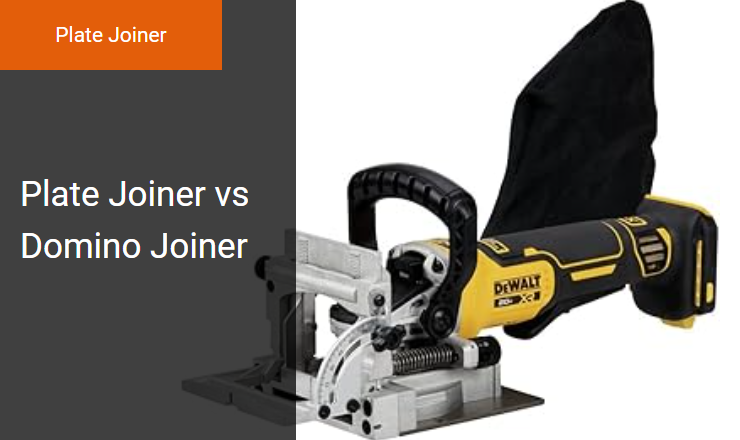
Achieving flush, perfectly aligned panel joints is a persistent challenge for woodworkers, often resulting in frustrating hours spent sanding down uneven glue-ups. While standard workshop funding sources are typically prioritized for major machinery like table saws or cabinet-grade routers, joint-specific alignment requires dedicated precision. This is where the plate joiner excels; it grants woodworkers unmatched lateral forgiveness during assembly, streamlining the glue-up process.
As an educational stipulation, however, it is critical to note that biscuit joiners are engineered primarily for alignment and flushness rather than heavy load-bearing structural strength. Premium options like the Lamello Classic X and the Festool Domino DF 500 represent the two distinct philosophies in this category. Below, we will analyze the mechanics of the plate joiner, compare its alignment capabilities directly against the Domino, and outline step-by-step techniques to achieve flawless joint registration in your shop.
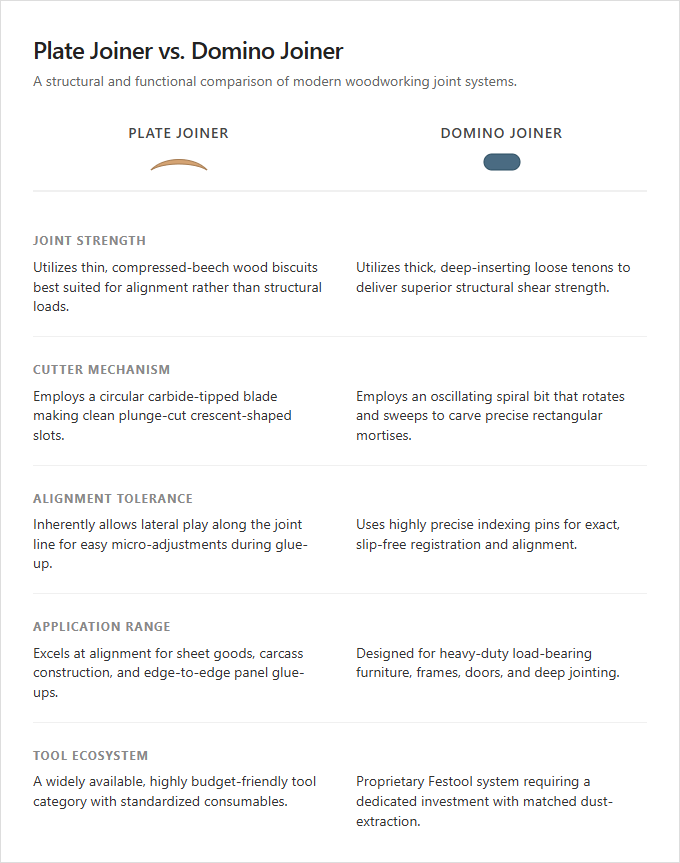
| Factor | Summary |
|---|---|
| Joint Strength | Domino joiners utilize thick, deep-inserting loose tenons to deliver superior structural shear strength compared to the thin compressed-beech wood biscuits used by plate joiners. |
| Cutter Mechanism | A plate joiner utilizes a circular carbide-tipped blade to plunge-cut crescent-shaped slots, whereas a Domino joiner employs an oscillating spiral bit that rotates and sweeps to carve precise rectangular mortises. |
| Alignment Tolerance | Plate joiners inherently allow for lateral play along the joint line for easy adjustment, while Domino joiners utilize precise indexing pins for exact, slip-free registration. |
| Application Range | Plate joiners excel at alignment for sheet goods and edge-to-edge panel glue-ups, whereas Domino joiners are designed for heavy-duty load-bearing furniture joinery. |
| Tool Ecosystem | The plate joiner is a widely available, budget-friendly tool, whereas the Domino joiner is a proprietary Festool system featuring specialized dust-extraction compatibility and high-precision engineering. |
Biscuit Slot Clearance for Side-to-Side Alignment
Plate joiners and domino joiners differ significantly in their approach to workpiece alignment. The key advantage of a plate joiner is the lateral clearance created by its crescent-shaped blade. Because the resulting slot is wider than the biscuit itself, woodworkers gain valuable side-to-side play. This lateral tolerance simplifies the glue-up process, allowing for precise real-time adjustments and flush alignment of wood faces before the adhesive cures.
In contrast, domino joiners utilize a mortise-and-tenon system that provides exceptional structural strength and rigid, immovable alignment. While the domino offers superior load-bearing capacity for heavy timber, it lacks the forgiving side-to-side tolerance of the biscuit slot. Plate joiners are ideal for cabinetmakers seeking rapid, adjustable panel alignment, while domino joiners are best suited for professional furniture makers requiring maximum joint strength and immovable precision.
Rectangular Tenons Prevent Twist Better Than Biscuits
When evaluating joinery methods, the structural differences between a plate joiner and a Domino joiner are substantial. A plate joiner utilizes thin, circular beechwood biscuits that primarily assist with sheet alignment but offer limited structural resistance. In contrast, the Domino joiner employs solid wood, rectangular loose tenons. These rectangular tenons provide superior mechanical strength, actively preventing rotational twist and racking under lateral stress, whereas circular biscuits can allow the joint to pivot.
Selecting the appropriate tool depends on the specific demands of your projects and workflow. Plate joiners are ideal for hobbyists focusing on basic cabinet alignment and quick carcass assembly, while Domino joiners are suited for professional furniture makers who require high-strength, load-bearing mortise-and-tenon joints.
Reference Face Registration for Joint Flushness
When comparing a plate joiner to a Domino joiner, the fundamental principle of alignment remains identical: reference face registration. For both power tools, referencing the fence or base against the face of the workpiece determines the precise vertical flushness of the joint. Any deviation during this registration step directly impacts how smoothly the joined faces align, making consistent technique critical regardless of the mechanism.
While both tools rely on face registration, they serve distinct structural needs. The plate joiner cuts shallow, crescent-shaped slots for flexible alignment, whereas the Domino cuts deep mortises for high-strength, loose-tenon joints. Woodworkers prioritizing quick alignment for cabinetry benefit from the plate joiner, while professional furniture makers requiring superior structural load capacity choose the Domino.
Precision Mortise and Crescent Slot Cutting
When choosing between a plate joiner and a domino joiner, the primary distinction lies in their cutting mechanisms. A plate joiner utilizes a circular carbide-tipped blade to cut crescent slots designed for wooden biscuits, while a domino joiner employs an oscillating cutter spindle that plunges into the material to create precise mortises for loose tenons.
These mechanical differences dictate the structural capacity and alignment flexibility of the resulting joint. The plate joiner is ideal for cabinetmakers prioritizing quick panel alignment, while the domino joiner is best suited for professional furniture makers requiring maximum structural strength for heavy-duty frames.
Domino Plunge Depth Outperforms Biscuit Strength
When comparing a plate joiner to a Domino joiner, the primary differentiator lies in the joint's structural integrity. While biscuit joiners cut shallow, crescent-shaped kerfs, the Domino joiner utilizes an oscillating plunge motion to create deep, precise mortises. The superior plunge depth capacity of the Domino system accommodates much longer loose tenons, which provide significantly higher shear strength and resistance to leverage than traditional wooden biscuits.
This structural disparity dictates how each tool is best utilized in the workshop. Plate joiners excel at quick alignment during panel glue-ups, whereas Domino joiners excel at heavy-duty, load-bearing frame construction. Plate joiners are ideal for hobbyists and cabinetmakers focusing on alignment and light-duty sheet goods, while Domino joiners are suited for professional furniture makers requiring robust, structural mortise-and-tenon joinery.
Integrated Indexing Pins for Layout-Free Alignment
When comparing a plate joiner to a domino joiner, the method of alignment is a key differentiator in workshop efficiency. While traditional biscuit jointers often require manual pencil layout lines for positioning, advanced domino joiners feature integrated indexing pins. These retractable pins reference directly off the workpiece edge, enabling rapid, highly repeatable alignment spacing without the need for tedious manual measuring.
Beyond alignment, the two tools serve different structural purposes. Plate joiners utilize thin, football-shaped biscuits primarily for alignment in sheet goods, whereas domino joiners plunge-cut deep mortises to accept thick wood tenons for heavy-duty structural joints. Plate joiners are best suited for cabinetmakers focusing on rapid panel alignment, while domino joiners are the preferred choice for professional furniture makers requiring maximum joint strength and load-bearing capacity.
Biscuit Expansion vs. Tenon Friction Fit
When comparing a plate joiner to a Domino joiner, the fundamental difference lies in how the joint secures the wood. Plate joiners utilize compressed beechwood biscuits that rely on moisture-induced expansion; upon contact with water-based wood glue, the biscuit swells to lock the joint tightly in place. In contrast, Domino joiners utilize rectangular loose tenons that require a precise friction fit, relying on exacting tolerances and tight wood-to-wood contact for structural integrity.
The choice between these tools dictates the workflow and overall strength of the assembly. Plate joiners are ideal for general hobbyists and cabinetmakers seeking quick alignment of sheet goods, whereas Domino joiners are suited for professional furniture makers and carpenters who demand high-strength, load-bearing joints for heavy-duty frames.
Leave a comment