
Hanging drywall is a notorious test of patience; a fraction of an inch too deep tears the paper face and ruins the holding power, while a proud screw head halts taping progress entirely. Many DIYers and general contractors instinctively reach for standard cordless drill-drivers-the ubiquitous workhorses of any toolbag-to tackle this tedious task.
However, upgrading to a dedicated, depth-sensitive screw gun grants installers flawless, repeatable depth control and massive time savings. Stipulation: While highly efficient, these specialized tools are engineered strictly for rapid, high-volume fastening and will not replace a drill for boring holes.
For instance, when hanging heavy 5/8-inch Type X drywall on commercial steel studs, a dedicated drywall screw gun ensures every fastener is dimpled perfectly on the first pass without manual adjustment.
Below, we will analyze the key differences in speed, clutch mechanics, and ergonomics between screw guns and drill drivers to help you choose the right tool for your next installation.
| Factor | Summary |
|---|---|
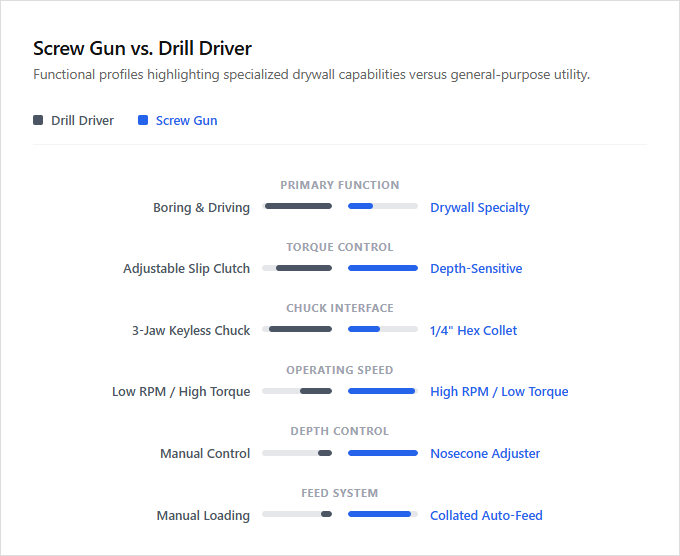
| Primary Function | While a drill driver is a versatile tool designed for boring holes and driving various fasteners, a screw gun is a highly specialized tool engineered specifically for high-speed drywall installation. |
| Torque Control | Drill drivers utilize an adjustable slip clutch to prevent overtightening, whereas screw guns rely on a depth-sensitive clutch mechanism that disengages the motor when the fastener is flush. |
| Chuck Type | A drill driver typically features a three-jaw keyless chuck to grip various bit shanks, while a screw gun uses a specialized 1/4-inch hex collet designed for rapid bit changes. |
| Operating Speed | Screw guns operate at much higher maximum RPM configurations to sink fasteners quickly, whereas drill drivers prioritize gear reduction to deliver higher torque at lower speeds. |
| Depth Control | Screw guns feature an adjustable nosecone to precisely set the countersink depth of screws, a dedicated component that drill drivers lack. |
| Feed System | Professional screw guns can utilize a collated magazine attachment for auto-feeding strips of screws, whereas drill drivers require manual, one-by-one fastener loading. |
Depth-Sensitive Nosecone Prevents Paper Tearing
When fastening drywall, selecting the right tool directly impacts the quality of the finish. While a standard drill driver offers versatile rotation and torque control, a dedicated screw gun is engineered specifically for high-speed, repetitive fastening. The defining advantage of the screw gun is its depth-sensitive nosecone, which automatically disengages the drive clutch once the screw reaches a preset depth. This specialized mechanism ensures precise screw depth, preventing the fastener from over-driving and tearing the paper facing of the drywall.
In contrast, a drill driver relies on a variable slip clutch and manual trigger control, making it highly adaptable for drilling holes and driving various fasteners but prone to over-penetration in soft materials. Tradespeople specializing in high-volume drywall installation require the speed and depth-control of a dedicated screw gun, whereas general contractors and DIY enthusiasts benefit more from the multi-purpose utility of a standard drill driver.
High-RPM Screw Guns Fasten Studs Faster Than Drills
While both tools drive fasteners, the screw gun and the drill driver serve distinct operational needs. The primary differentiator lies in motor speed and application-specific engineering. Screw guns feature high-RPM motors designed specifically for rapid, repetitive fastening into wood or metal studs. This high rotation speed allows professionals to sink screws almost instantly, far outpacing the slower, high-torque output of a standard drill driver.
Drill drivers prioritize versatility, making them ideal for drilling holes and driving varied fasteners into diverse materials. While they lack the specialized speed of a screw gun, their adjustable clutches offer precise control over power delivery. Dedicated drywall contractors and high-volume installers benefit most from the rapid efficiency of a screw gun, whereas general carpenters and DIY enthusiasts will find the adaptable drill driver more suited to their diverse project needs.
Nosecone-Pressure Activated Silent Clutch
While a standard drill driver features a slip clutch that spins continuously, a specialized screw gun operates on a unique demand-based system. The core of this tool's efficiency is the silent clutch mechanism. This system ensures the motor can run continuously, but the drive shaft engages only when direct pressure is applied to the nosecone.
This pressure-sensitive engagement prevents stripping of screw heads and significantly reduces job site noise. Once the screw reaches the preset depth, the clutch disengages automatically, ensuring consistent flush finishes across drywall or decking panels.
Traditional drill drivers are ideal for general contractors needing versatility for varied drilling and fastening tasks, whereas screw guns are best suited for high-volume drywall installers who require rapid, repetitive, and precise depth control.
Lock-on button enables continuous motor operation for faster high-volume installations
While a drill driver is a versatile tool designed for drilling holes and driving various fasteners, a dedicated screw gun is engineered specifically for high-volume, repetitive fastening tasks. The primary distinction lies in how these tools manage motor engagement and depth control during operation.
A key advantage of the screw gun is its lock-on button, which enables continuous motor operation. This feature keeps the motor running constantly while the clutch only engages when pressure is applied to the nosecone, significantly accelerating drywall or decking installation. Conversely, a drill driver requires manual trigger modulation for every individual screw, which slows down repetitive tasks.
Drill drivers are best suited for general contractors and DIY enthusiasts who require versatility for diverse tasks, whereas screw guns are designed for professional drywall installers and high-volume builders who prioritize speed and depth consistency.
Auto-Feed Attachment for Collated Drywall Screws
While both screw guns and drill drivers are essential fastening tools, they serve distinct operational roles. A primary differentiator is the screw gun's compatibility with collated attachments. These systems facilitate the automatic feeding of strip-loaded drywall screws, enabling rapid, continuous installation without manual reloading. In contrast, standard drill drivers require the manual placement of individual fasteners, which significantly slows down high-volume installation tasks.
Screw guns operate at higher rotational speeds and feature depth-sensitive clutches to prevent over-driving, whereas drill drivers offer adjustable torque settings for broader utility. Professional drywall contractors rely on the high-speed efficiency of a screw gun for boarding tasks, while general carpenters and DIYers benefit more from the multi-purpose versatility of a standard drill driver.
Low-Torque Screw Guns Prevent Steel Stud Stripping
While drill drivers rely on high, adjustable torque to force fasteners into various materials, specialized screw guns utilize a depth-sensitive clutch system. This design results in a lower, highly controlled torque output. In commercial drywall installation, this lower torque is crucial because it prevents fasteners from stripping out of light-gauge steel studs, ensuring a secure attachment without damaging the thin metal framing.
Drill drivers offer broad versatility for drilling holes and driving diverse fasteners through varying resistance, whereas screw guns excel at rapid, repetitive tasks at a consistent depth. Professional drywall installers require the speed and precision of a dedicated screw gun, while general contractors and DIY enthusiasts are better suited to the adaptable power of a standard drill driver.
Micro-Adjustable Depth Locator for Perfect Drywall Dimples
While a standard drill driver offers versatile drilling and driving capabilities, a dedicated screw gun is engineered specifically for high-speed drywall installation. The defining advantage of the screw gun is its micro-adjustable depth locator. This specialized nosecone mechanism ensures that every fastener is set at the exact depth required, creating the perfect dimple for mudding without tearing the paper face or damaging the fragile gypsum core.
In contrast, a drill driver relies on a slip clutch which lacks the specialized depth-sensing precision needed for rapid, repetitive drywall fastening. For projects requiring varied drilling and fastening tasks, a drill driver is the ideal tool for general DIYers and carpenters, whereas a screw gun is the essential choice for professional drywall installers prioritizing speed and flawless finishing.
Leave a comment